

Last Updated: November 1, 2026
Quick Summary
Select a tension wrench by matching its width, thickness, and length to your keyway, starting with a standard bottom-of-keyway wrench in a mid-size width. Test the fit on a practice lock: the blade should seat without wobble, leave room for your pick, and flex only under firm pressure. Change one variable at a time, width first, then position, then style.
- A standard tension wrench is an L-shaped steel tool that seats in the bottom of the keyway and turns the plug.
- Bottom-of-keyway tension suits beginners and wide keyways, while top-of-keyway gives more pick clearance in narrow keyways.
- A blade that rocks side to side is too narrow, and one that bows under light finger pressure is too thin.
- A 4-inch wrench suits most practice locks, while longer wrenches help on deep keyways but crowd your hand.
- Use the lightest pressure that keeps set pins from dropping, easing off the moment a pin sets.
Table of Contents
- Why the Tension Wrench Decides the Pick
- Tension Wrench Types: Standard, Twisted, and Flex Designs
- Top of Keyway vs Bottom of Keyway Tension
- Sizing and Fit: Width, Thickness, and Keyway Clearance
- Material, Hardness, and Durability
- How to Apply Tension When Lock Picking
- Troubleshooting Poor Fit and Inconsistent Feedback
- Best Lock Picks for Beginners: Building a Starter Kit
- Frequently Asked Questions
Why the Tension Wrench Decides the Pick
Here's the core idea: a pick lifts pins, but tension holds them at the shear line.
So the wrench sets your feedback. It tells your fingers when a pin sets and when it doesn't.
Below, we'll walk through wrench types, fit, materials, and a simple selection process. You'll also get a troubleshooting list for the feedback problems that trip up most beginners.
Tension Wrench Types: Standard, Twisted, and Flex Designs
Three wrench families cover almost every lock you'll meet: standard, twisted, and flex. Each one trades rigidity for reach or give. Your lock and your keyway decide which one you reach for.
Standard and Double-Pronged Wrenches
A standard tension wrench is an L-shaped piece of steel that inserts into the bottom of the keyway and turns the plug. It's the workhorse of the category and the right first buy for most people.
Double-pronged wrenches split into two prongs. They fit keyways where a single blade slips or sits loose. The extra prong spreads pressure across more of the keyway, which helps on wider openings.
These wrenches are stiff. That stiffness gives you clean, direct feedback. You feel every pin set through the steel.
Twisted and Flex Wrenches
Twisted wrenches have a spiral section that acts like a spring. They bend under pressure instead of fighting it.
Flex wrenches take the same idea further with a flexible shaft. They reach around obstructions and let you work at odd angles.
Start with a standard wrench. The replacement tension wrench is a tapered steel design that fits a wide range of locks and costs $5.99.

Top of Keyway vs Bottom of Keyway Tension
Top of keyway versus bottom of keyway tension is about where the wrench sits in the lock.
BOK is the beginner default.
TOK gives you more room to work. With the wrench out of the bottom, your pick has a clearer path to the pins.
The catch: TOK needs a wrench sized to the top ledge of that specific keyway.
| Factor | Bottom of Keyway | Top of Keyway |
|---|---|---|
| Best for | Beginners, wide keyways | Narrow keyways, tight picks |
| Fit difficulty | Easy to seat | Needs exact width |
| Pick clearance | Crowded | More room |
| Feedback | Good | Cleaner |
| Common problem | Blocks the pick | Slips if loose |
Try BOK first. Switch to TOK when your pick feels cramped.
Sizing and Fit: Width, Thickness, and Keyway Clearance
Fit is where most wrench problems start. A tension wrench that's too narrow wobbles. One that's too wide won't enter the keyway at all. Either way, you lose the steady pressure that makes pins set.
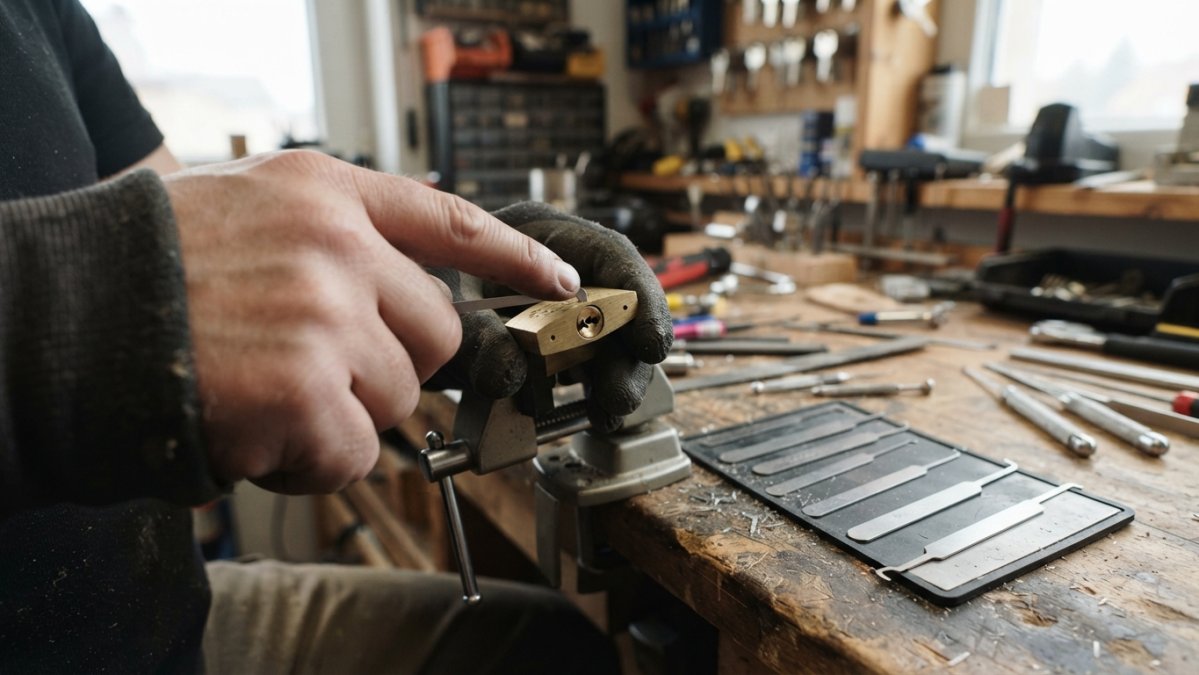
Tension wrench dimensions vary by manufacturer and lock model, so measure the blade rather than relying on the label. Keyway dimensions differ from one lock to the next.
Check three dimensions before you buy:
- Width: match the keyway opening. The wrench should fill it with little play. If you can rock the blade side to side more than a hair, it's too narrow.
- Thickness: thin enough to clear the pins, thick enough not to bend. A blade that bows under light finger pressure is too thin for that lock.
- Length: long enough to grip, short enough to stay out of your pick's way. A 4-inch wrench suits most practice locks; longer wrenches help on deep keyways but crowd your hand.
A Fit-and-Selection Decision Tree
Use this sequence on a practice lock you know well before trying a new wrench on unfamiliar hardware:
- Insert the wrench with no pick in the lock. It should slide in smoothly and seat against the plug without forcing.
- Test side-to-side play. If the blade rocks noticeably, step up one width size or switch to a double-pronged model that spreads pressure across the keyway.
- Test pick clearance. Insert your pick alongside the wrench. If the pick can't reach the pins without scraping the wrench, the wrench is eating your keyway. Move from bottom-of-keyway to top-of-keyway tension, or choose a thinner blade.
- Test tension feel. Apply light pressure. If the wrench flexes before the plug starts to turn, it's too thin or too soft for that lock; try a thicker or stiffer blade.
- Confirm the seat. If the wrench slips out under light tension, the tip profile doesn't match the keyway ledge. Try a different tip shape or a top-of-keyway wrench sized to the upper ledge.
If the first wrench fails any step, change one variable at a time: width first, then position (bottom to top), then style (standard to twisted or flex). Changing everything at once makes it impossible to learn what worked.
Keyway clearance is the space left for your pick. For more on matching tools to keyways, see our guide on how to choose lock picks that actually work.
Material, Hardness, and Durability
Steel quality affects whether a wrench lasts or bends under stiff tension. Hardened steel with some spring tends to hold its shape better than soft or brittle metal.
A common mistake is buying the cheapest set online and expecting it to hold up. Thin, soft wrenches flex under pressure and never give you steady tension.
Look for these signs of a durable wrench:
- Springy feel that returns to shape after bending
- Clean edges with no burrs
- Consistent thickness along the blade
If your picks and wrenches keep bending, the cause is usually material and hardness, not your hands. Our article on why lock picks bend easily breaks down the fixes.
How to Apply Tension When Lock Picking
Applying tension well is a skill, and it starts lighter than you think. Most beginners push far too hard.
Follow these steps:
- Seat the wrench fully in the keyway with no wobble.
- Apply light pressure in the direction the lock turns.
- Hold that pressure steady while you work the pick.
- Ease off the moment a pin sets, then hold.
- Adjust in small amounts, never in big shoves.
The goal is the lightest pressure that keeps set pins from dropping. Think of it as a steady lean, not a twist.
Tool handling matters here. Our list of must-have lock picking accessories covers the tools that support steady tension work.
Troubleshooting Poor Fit and Inconsistent Feedback
Bad feedback almost always traces to one of four causes. Work through them in order.
- Wrench wobbles in the keyway: the blade is too narrow. Step up a size or switch to a double-pronged model.
- Wrench won't seat: the blade is too wide or too thick. Try a thinner profile.
- Pins won't stay set: you're using too much tension. Ease off and hold lighter.
One more culprit: a worn or dirty practice lock. Clean it before you blame your tools. Test every new wrench on a lock you know well so you can feel the difference.
Best Lock Picks for Beginners: Building a Starter Kit
A starter kit should be small, durable, and matched to the locks you'll actually practice on. You don't need a giant set. You need a few good tools that fit well, plus a clear reason for each item you buy.
Here's our beginner checklist with the reasoning behind each line:
- One standard tension wrench in a mid-size width. This is your default bottom-of-keyway tool. Pick a blade around 0.025 inch thick and about 0.080 inch wide; it fits many common practice padlocks and leaves room for a pick.
- One twisted or flex wrench for tight keyways. Add this only after you hit a lock where the standard wrench crowds your pick or binds. The give helps in narrow keyways, but expect softer feedback.
- A short hook and a rake pick. One pick for single-pin work and one for quick raking practice. Two good picks teach more than ten specialty shapes.
- One or two practice locks with clear keyways. Choose locks you own and can see into, so you can watch pins set and connect feel to mechanism.
How to Choose Without Overbuying
Buy quality over quantity. Three well-made tools beat fifteen cheap ones. Before adding a tool, ask three questions:
- Does it solve a problem I've actually hit? If a standard wrench already fits your practice locks, you don't need a flex wrench yet.
- Does it match my keyways? Measure the blade width and thickness against the locks you own. A wrench that doesn't fit is clutter, not a backup.
- Can I feel the difference? A stiffer blade gives cleaner feedback; a flexier one gives reach. Buy the trade-off you need, not the one that looks interesting.
Expand only when a specific lock defeats your current fit. When you're ready to expand, our roundup of the best beginner lock picking tools covers the picks worth adding first.
Practice Safely and Legally
Practice legally and ethically. Only pick locks you own or have written permission to work on. Lock pick laws vary, so check your local rules before you carry a set in public. Keep tools out of reach of children, and never practice on a lock that secures a door you rely on for safety.
The Dyno Kwick Pick is a pen-style 3-in-1 tool made in the USA.
Frequently Asked Questions
What is the difference between top-of-keyway and bottom-of-keyway tension wrenches?
Top-of-keyway (TOK) wrenches sit in the upper groove of the keyway, leaving the lower channel clear for your pick and giving cleaner feedback. Bottom-of-keyway (BOK) wrenches rest in the bottom ledge, which is wider and easier to seat but can block pick movement in tight keyways. Many locksmiths keep both on hand and switch based on the lock's keyway shape and how much room the pick needs.
Do I need different tension wrenches for different locks?
Yes. Keyway width, depth, and warding vary widely between padlocks, deadbolts, and cabinet locks, so a wrench that fits one may slip out of another. A practical approach is to carry a small range of widths and thicknesses and test-fit each before picking. If a wrench rattles or drops out under light pressure, it is the wrong size for that lock.
How much tension should I apply when picking a lock?
Start with light tension, roughly the pressure you would use to hold a piece of paper against a wall. Enough to bind the pins, not enough to jam them. If pins feel stuck or the pick cannot move, ease off. Consistent, gentle pressure gives you the feedback needed to feel each pin set, and it is the single most common skill beginners need to practice.
Can a beginner use a 3-in-1 tool instead of individual tension wrenches?
A pen-style 3-in-1 tool like the Dyno Kwick Pick combines pick and tension functions in one pocket-sized device, which suits beginners who want to practice without assembling a full kit. It is made in the USA and backed by a satisfaction-first guarantee. Many hobbyists still add a replacement tension wrench, available for $5.99, so they have a spare that fits a wide range of locks.
Selecting the right tension wrench comes down to fit, material, and a light touch. Get those three right and every lock gets easier to read. Dyno Kwick Pick builds a pen-style 3-in-1 tool made in the USA and trusted by locksmiths for over 25 years, with a tapered steel tension wrench that fits a wide range of locks. It's beginner-friendly, discreet, and built for durability and precision. Get started with Dyno Kwick Pick and give your hands the steady feedback that makes practice pay off.

0 commentaire