

Table of Contents
- What to Look for in Beginner Lock Picking Tools
- Quick Comparison: Best Beginner Lock Picking Tools 2026
- Essential Pick Profiles: Hooks, Rakes, and Tension Wrenches
- Why Lock Picking Practice Locks Matter for Skill Building
- The Legal Status of Lock Picks: What Beginners Need to Know
- How to Choose a High Quality Lock Pick Set on a Budget
- Common Mistakes When Buying Your First Lock Picking Kit
- Frequently Asked Questions
Last Updated: September 21, 2026
What to Look for in Beginner Lock Picking Tools
The best beginner lock picking tools in 2026 share one trait: they teach you feedback instead of hiding it. New pickers sometimes quit because their first kit fought them. A pen-style 3-in-1 tool, a short hook, a rake, and a tension wrench beat a 30-piece set you don't understand.
Here's what actually matters when you buy:
- Tension control first. The wrench matters more than the pick.
- Pick thickness around 0.023 to 0.025 inches for standard keyways.
- Handle ergonomics so your hand doesn't cramp in ten minutes.
- A short hook and a rake, nothing exotic.
Quick Comparison: Best Beginner Lock Picking Tools 2026
The table below compares what a first-time picker actually needs, with real prices from our catalog.
| Tool | Price | Best For | Standout Feature |
|---|---|---|---|
| Dyno Kwick Pick | $20.50 | First pick, everyday carry | Pen-style 3-in-1, made in the USA |
| Dyno Kwick Pick Gift Set | $31.99 | Gifting a new hobbyist | Engraved wooden box, spare rake |
| How to Pick Locks (60-page guide) | $14.99 | Learning the theory | Illustrated, full color |
| Beginners Visual Guide (190 illustrations) | $24.99 | Deeper study | 176 pages, cutaway diagrams |
| Repinnable Practice Lock Kit | $47.99 | Building real skill | 30+ security pins, billions of combinations |
Essential Pick Profiles: Hooks, Rakes, and Tension Wrenches
Three profiles cover almost everything a beginner touches, but why each works matters more than the name on the handle.

Pick thickness: the spec nobody explains
Pick thickness is measured in thousandths of an inch and decides which keyways you can enter. Standard residential keyways, most Schlage and Kwikset deadbolts, accept picks around 0.023 to 0.025 inches. European and some automotive keyways need 0.015 to 0.018 inch picks. A 0.025 inch pick is stiff with clean feedback but won't fit narrow warding; a 0.015 inch pick slides into tight keyways but flexes under heavy tension and mutes the feel.
Tension wrench placement: bottom vs. top of keyway
Tension wrenches come in two placements, and the difference is mechanical.
- Bottom of keyway (BOK) wrenches insert under the pins and are easier to seat, which is why most starter kits ship them. The trade-off: a BOK wrench can occupy space the pick needs and slip out under light tension.
- Top of keyway (TOK) wrenches insert above the pins and leave the bottom of the keyway clear for the pick. They give cleaner binding pin feedback because the tension vector is more direct, but they take practice to keep seated.
What to skip on day one
Skip the long hook, diamond, half-diamond, and ball-end picks for now. Diamonds suit wafer locks and some automotive work; ball-ends suit certain tubular and disc-detainer locks. None of that is beginner territory.
Why Lock Picking Practice Locks Matter for Skill Building
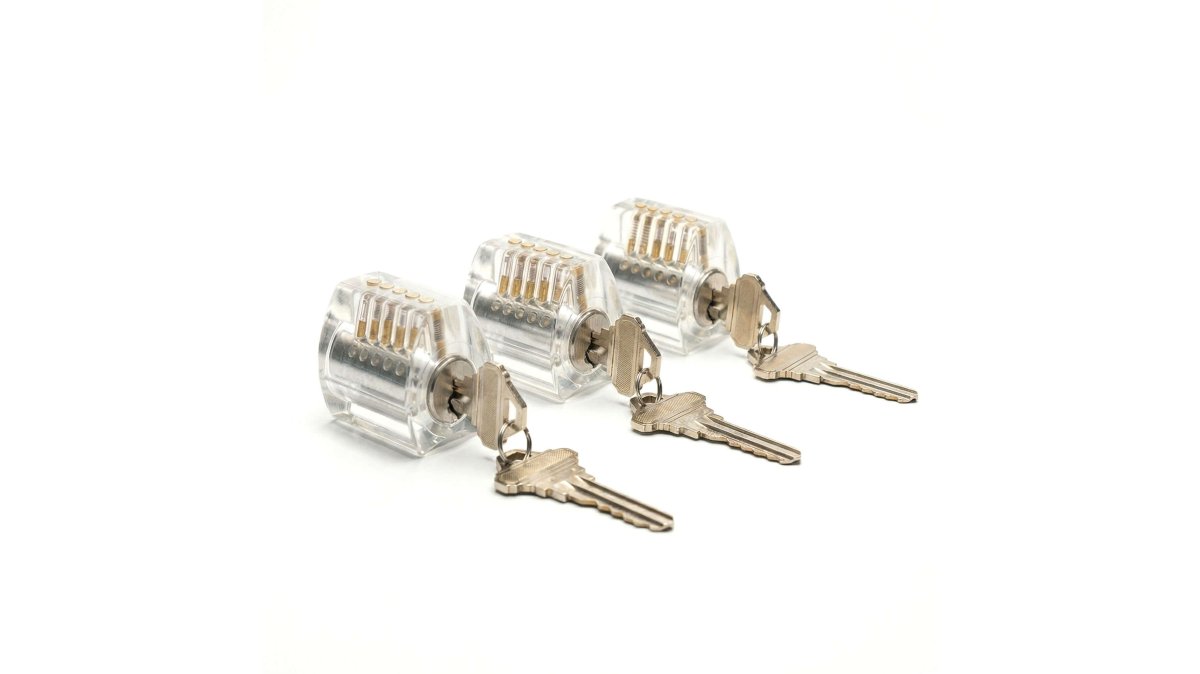
Practice locks turn guesswork into visible cause and effect. A clear practice lock shows the binding pin principle in real time: apply tension, one pin binds first, lift it, the core rotates slightly, and the next pin binds. Without that feedback, beginners spend weeks guessing which pin moved.

The Legal Status of Lock Picks: What Beginners Need to Know
Most guides skip this section, but the legal picture for lock picks is genuinely uneven across states, a beginner who buys first and reads later can end up in a bad situation over a $20 tool.
The general rule
In most states, lock picks are legal to own; possession alone isn't a crime in the majority of jurisdictions. What changes the analysis is intent, usually inferred from context: where you are, what you're doing, and whether you have a lawful reason to carry the tools.
What the law actually looks at
Courts and prosecutors tend to weigh the same handful of factors:
- Location. Picks in your own home, on your own workbench, next to your own practice locks, read very differently than picks in your pocket outside a building you don't own.
- Conduct. Practicing on a lock you own is lawful in essentially every state. Picking a lock you don't own, even as a joke, even if it opens, is where the trouble starts.
- Explanation. A locksport hobbyist with a repinnable practice lock, a book on the subject, and a forum history has a coherent story. Someone with picks and no context does not.
- Prior record. Not decisive on its own, but it shapes how the other factors get read.
The practical rules for hobbyists
- Own your tools. Keep them at home or in a dedicated case.
- Practice only on locks you own. Buy your own practice locks and deadbolts. Never pick a lock on someone else's property, even with permission you can't document.
- Don't carry picks as everyday carry unless your state clearly permits it and you have a lawful reason. A pen-style tool that looks like a pen is not a legal shield.
- Check your state statute directly. Your state legislature's website publishes the actual text. Read the section on burglary tools or locksmith licensing, whichever your state uses.
- Verify before you buy. If your state requires a license to possess picks, know that before the package arrives.
Where to verify
State criminal codes are the authoritative source, not forum posts or retailer FAQs. Search your state legislature's site for terms like "burglary tools," "locksmith licensing," and "possession of lock picking instruments." The Electronic Code of Federal Regulations covers federal regulations, but lock pick possession is overwhelmingly a state-law issue, so the state code is where you'll find your answer.
How to Choose a High Quality Lock Pick Set on a Budget
A high quality lock pick set for a beginner costs less than most people expect. You don't need twenty profiles, three or four well-made ones, with your money where it builds skill.
Work through this checklist before you buy:
- Does the set include a stiff tension wrench, not a flimsy one?
- Are the picks stainless steel or a comparable spring steel?
- Is the pick thickness suited to standard residential keyways?
- Do the handles fit your hand without cramping?
- Does the set include or pair with a practice lock?
- Is the manufacturer clear about material and country of origin?
Common Mistakes When Buying Your First Lock Picking Kit
The biggest mistake is buying volume over quality. A 24-piece set priced like a good three-piece set is usually 21 pieces of filler and three tools that bend.
Here's what to avoid:
- Ignoring the tension wrench. It's the tool you'll use every single time.
- Skipping practice locks. Picks without something to pick teach you nothing.
- Buying security pin locks too early. Master standard pins first.
- Practicing on locks you don't own. A legal and ethical line, not a preference.
- Neglecting maintenance. Wipe picks after use and store them dry to prevent corrosion.
Frequently Asked Questions
What is the best lock picking tool for beginners?
A pen-style tool like the Dyno Kwick Pick is a strong first choice because it combines a snake rake and tension wrench in one compact, discreet package. It is beginner-friendly and requires minimal technique to start raking simple locks. Pair it with clear practice locks to see how pins move, then move on to a high quality lock pick set with individual hooks for single pin picking.
What is a good lock pick kit for beginners?
Look for a kit that includes a short hook, a rake, and at least one tension wrench. The Dyno Kwick Pick Gift Set at $31.99 offers a pen-style pick with a replacement rake and an engraved wooden box. For more variety, add the Dangerfield Repinnable Practice Lock Kit at $47.99, which comes with 30+ pins including spool and serrated types so you can practice progressively.
What is the best kit to learn how to pick locks?
The best learning kit combines picks, practice locks, and a visual guide. Start with the Practice Locks Set, 3 Clear Progressive Locks at $49.99, which includes standard, spool, and serrated pin locks. Add the Lock Picking Book - Beginners Visual Guide at $24.99 for 190+ color illustrations. This trio lets you see, feel, and understand each technique before moving to real locks.
Are there legal restrictions on owning lock picking tools?
Lock pick ownership laws vary by state and locality. Some states restrict possession if there is intent to commit a crime, while others require a locksmith license for certain tools. Before buying, check your state and local regulations. Many locksport enthusiasts keep picks for hobby use only and never use them on locks they do not own. Always practice on your own property or with explicit permission.
What is the easiest way to pick locks for beginners?
Raking is the simplest entry point. Insert a snake rake into the keyway, apply light tension with a tension wrench, then rock the rake in and out. The Dyno Kwick Pick includes a snake rake designed for this. Once you can open a clear practice lock consistently, switch to single pin picking with a short hook to build precision and understand binding pin order.
0 commentaire