

Last Updated: October 28, 2026
Quick Summary
Choose lock picks by first identifying your lock type, measuring the keyway, and checking the warding, because a pick set is only as useful as the keyways it fits. Match slim picks to tight keyways and always include a tension wrench, since it controls binding order.
- Identify the lock type, measure the keyway, and check the warding before buying.
- Spring steel picks with a polished finish reduce friction and return to shape after flex.
- Most beginners over-tension the wrench, which stops pins from setting in sequence.
- A starter kit needs only a snake rake, short hook, tension wrench, and slim pick.
- The 3-lock progressive set includes clear, spool, and serrated practice locks.
Table of Contents
- Start With the Locks You'll Actually Pick
- Lock Pick Materials: Steel, Finish, and What Breaks First
- Why the Lock Pick Tension Wrench Decides the Pick
- The Best Lock Pick Set for Beginners Is Smaller Than You Think
- Lock Picking Practice Locks: Learn Before You Touch a Real Door
- Matching Pick Shapes and Handles to Your Hands
- Build Your Kit From the Dyno Kwick Pick Lineup
- Frequently Asked Questions
Start With the Locks You'll Actually Pick
Learning how to choose lock picks starts with an honest inventory of the locks you plan to open, and the best lock picks are the ones that fit them. A pick set is only as useful as the keyways it fits, and most beginners buy for an imaginary lock instead of the one on their own cabinet.
Someone may buy a fat 20-piece set, then discover the picks are too thick for the narrow keyway on their storage unit.
Here's the practical sequence:
- Identify the lock type. Pin tumbler locks dominate residential doors, padlocks, and cabinets. Wafer locks show up in filing cabinets and vehicle doors.
- Measure the keyway. A tight, paracentric keyway needs a slim pick. A wide-open one tolerates almost anything.
- Check the warding. Complex warding blocks thick picks before they ever reach the pins.
Most household locks fall into a handful of familiar families, and the lock types reference from the Electronic Security Association is a reasonable starting point for naming what you're facing.
The takeaway: match the tool to the lock, not the other way around.
Lock Pick Materials: Steel, Finish, and What Breaks First
A few material signals worth checking:
- Spring steel for picks: it returns to shape after flex.
- Polished finish: less friction inside the keyway, less drag on the pins.
- Solid handles: a molded or aluminum handle spreads force and stops the blade from twisting.
Why the Lock Pick Tension Wrench Decides the Pick
The tension wrench is the most underrated tool in the kit. It controls binding order, and binding order decides whether single-pin picking works at all. Get tension wrong and even a perfect pick does nothing.
Light, steady rotational pressure is the goal. Too much and pins bind so hard they will not set; too little and nothing binds in sequence. Most beginners over-tension by a wide margin, then blame the pick.
This is where a compact tool earns its place. The Dyno Kwick Pick includes a snake rake and a tension wrench in a pen-style aluminum body.
The Best Lock Pick Set for Beginners Is Smaller Than You Think
Here's one possible starter kit:
| Tool | Purpose | Why It Belongs |
|---|---|---|
| Snake rake | Fast raking of simple locks | Builds early confidence |
| Short hook | Single-pin picking | The core skill |
| Tension wrench | Controls binding order | Non-negotiable |
| Slim pick | Tight keyways | Covers small locks |
For a deeper look at building skills in stages, see our guide to progressive training locks.
Lock Picking Book - Beginners Visual Guide, 190 Color Illustrations →
Lock Picking Practice Locks: Learn Before You Touch a Real Door
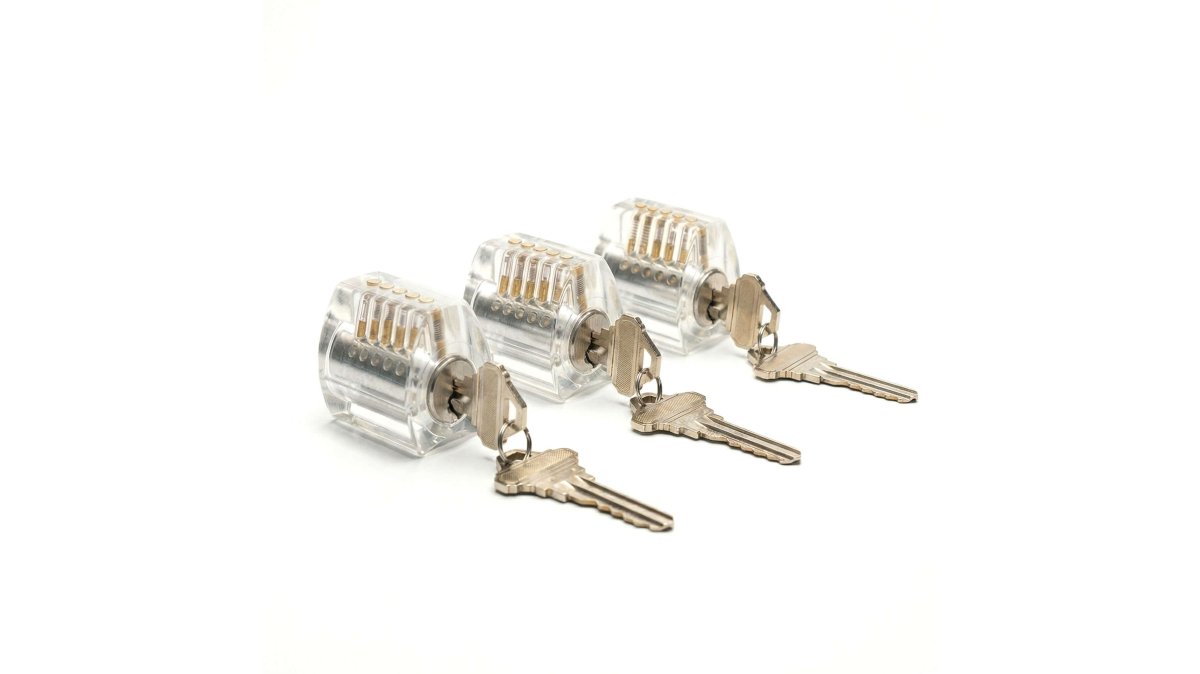
Lock picking practice locks can provide a way to practice. The clear practice locks in the 3-lock progressive set let you watch the pins move.

The 3-lock progressive set includes one clear lock with standard pins, one with spool pins, and one with serrated pins.
The Dangerfield repinnable cutaway lock can be repinned with a different biting pattern.

Matching Pick Shapes and Handles to Your Hands
Test a few profiles before committing:
- Short hook: general single-pin picking, best feedback
- Long hook: deep or recessed pins
- Snake rake: quick raking on loose tolerances
- Diamond: versatile, forgiving on unfamiliar keyways
Build Your Kit From the Dyno Kwick Pick Lineup
The Dyno Kwick Pick has a pen-style format and a pocket clip.
The Dyno Kwick Pick is a pen-style 3-in-1 tool made in the USA and trusted by locksmiths for more than 25 years. The Kwick Pick Set includes the Dyno Kwick Pick and the slimmer Dyno Stealth.
Frequently Asked Questions
What should a beginner look for in a lock pick set?
A pen-style tool like the Dyno Kwick Pick ($20.50) includes a snake rake and a tension wrench in one body. The clear practice locks in the three-lock progressive set let you watch the pins move.
Are stainless steel or carbon steel lock picks better?
The Dyno Kwick Pick has an aluminum body and a polished, corrosion-resistant finish.
How many picks should a beginner lock pick set include?
The three-lock progressive set ($49.99) includes one clear lock with standard pins, one with spool pins, and one with serrated pins.
Do lock pick handles make a difference?
Yes, mostly for comfort and feedback. A bare metal shaft digs into your fingers during long practice sessions, and a handle that is too thick dulls the feel of the pins. Pen-style bodies solve this by giving you a grip similar to a pen, which most people already hold with fine control. If you pick for more than 20 minutes at a time, handle comfort stops being cosmetic and starts affecting your tension control.
How can you practice lock picking safely and legally?
A repinnable cutaway lock ($69.99) can be repinned with a different biting pattern for practice.
Choosing lock picks is really a decision about discipline: fewer tools, better ones, and enough practice to read the feedback. Dyno Kwick Pick builds for exactly that approach, with a pen-style 3-in-1 aluminum tool that's made in the USA, beginner-friendly, and backed by a satisfaction-first guarantee. Get started with Dyno Kwick Pick and carry a tool that earns its place in your pocket.

0 commentaire