

Table of Contents
- Lock Picking Legal Guidelines for Beginners: What You Need to Know
- Is It Legal to Own Lock Picks? Federal vs. State Rules
- Lock Picking Laws by State: A Beginner's Legal Map
- How Intent and Circumstances Affect Lock Picking Legality
- Travel and Transport: Carrying Lock Picks in a Vehicle
- Practice Safely: Lock Picking Practice Locks and Permission
- Choosing a Beginner Lock Pick Set for Legal Practice
- Conclusion: Staying Legal While Learning Lock Picking
- Frequently Asked Questions
Last Updated: October 15, 2026
Lock Picking Legal Guidelines for Beginners: What You Need to Know
Lock picking legal guidelines for beginners start with one truth: the tools are rarely the problem, the reason you are holding them decides everything.
Lock picking is manipulating a lock's internal pins to open it without a key.
A locksmith carries picks daily without worry; a hobbyist with the same tools outside a stranger's door at midnight faces a very different conversation.
Ownership vs. Possession vs. Carrying vs. Use
Ownership, possession, carrying, and use are four separate legal ideas, and confusing them is the most common beginner mistake. You can legally own a lock pick set at home, yet break the law the moment you carry it with criminal intent or use it on property that is not yours.
Here is how each one works:
- Ownership: Having the tools as personal property. Rarely restricted on its own.
- Possession: Having them on your person or in your control. Some states treat this more strictly than ownership.
- Carrying: Transporting them in public or in a vehicle. This is where most charges start.
Is It Legal to Own Lock Picks? Federal vs. State Rules
There is no federal law that bans owning lock picks. Federal rules target the act, not the object.
State law is where the real rules live. Some states barely mention lock picks.
So the honest answer to "is it legal to own lock picks" is yes in most places, but always with conditions, intent and circumstance, not the tools.
Lock Picking Laws by State: A Beginner's Legal Map
There is no single national answer on lock pick rules. What is legal in one state may be a misdemeanor two states over. Sort states into three tiers, then verify your own statute.
Tier 1: States That Rarely Single Out Lock Picks
A small group of states do not name lock picks in their criminal codes. Picks are treated like any other tool: ownership and possession are generally lawful, and carrying is usually fine unless prosecutors tie the tools to a separate crime.
"Not named" does not mean "no rule." If you are caught opening a door that is not yours, the absence of a tool-specific statute will not protect you, the underlying burglary, trespass, or theft charge still applies.
Tier 2: States With Burglary Tool Statutes
Most states have a burglary tool statute making it a crime to possess, make, or carry a tool, often explicitly including lock picks, tension wrenches, slim jims, and pry bars, with the intent to commit burglary, theft, or another crime.
The critical phrase is "with intent." The tool alone is not the offense; prosecutors must show you meant to use it unlawfully.
Tier 3: States With Heightened Restrictions
A smaller number of states layer on extra rules: restricting possession by people with prior burglary convictions, treating picks in or near a vehicle as evidence of intent, or regulating sales to minors. Here, beginners must be most careful about transport and storage, not just use.
How to Check Your Own State
Do not rely on a blog post, including this one, for the final word. Statutes are amended, court decisions shift application, and city ordinances add rules on top of state law. Use this sequence:
- Search your state legislature's website for the terms "burglary tools," "lock picks," and "possession of implements of crime."
- Read the actual statutory text, not a summary. Pay attention to the words "intent," "knowingly," and "with purpose."
- Check whether your state's highest court has interpreted the statute in a published opinion.
- Check your city and county codes for any local add-ons.
- If anything is unclear, ask a licensed attorney in your state before you buy, carry, or use picks outside your home.
A state legislature search tool is the fastest starting point for step one.
Penalty Ranges to Expect
Penalties vary, but the pattern is consistent: possession with intent is usually a misdemeanor for a first offense, with jail time, fines, and probation possible. If the tools are tied to an actual break-in, the charge is typically elevated to felony burglary with substantially longer sentences. Confirm the current classification in your jurisdiction.
| Situation | Legal Risk | Why |
|---|---|---|
| Owning picks at home | Low | Ownership alone is rarely restricted |
| Carrying picks in public | Medium | Some states treat this as intent evidence |
| Picking a lock you own | Low | You have the owner's permission |
| Picking a lock with written permission | Low | Documented authorization protects you |
| Picking a lock you do not own | High | This is where charges begin |
How Intent and Circumstances Affect Lock Picking Legality
Intent is the hinge every lock picking case swings on. The tools are neutral objects. What turns a hobby into a charge is the story the surrounding facts tell about why you had them and what you planned to do.
The Four Questions Courts Actually Ask
A prosecutor's analysis usually comes down to four questions. Understanding them shows how your conduct looks from the outside.
- What was your stated and apparent purpose? Practicing on your own lock, working a locksmith job, or responding to a lockout call reads very differently than "I was just curious" outside a building you do not own.
- Where were you? Location matters enormously. Your own garage, a locksmith's shop, and a locked commercial building at night are three different legal universes.
- What else was with you? A practice lock and a tension wrench tell one story. Picks, gloves, a pry bar, and a flashlight tell another. Context is evidence.
- Did you have permission? A text, email, signed note, or work order from the lock owner is the single strongest fact you can put in front of an investigator.
Possession, Carrying, and Use Are Three Different Legal Questions
This is the distinction most beginner guides blur, and it matters most. Treat them as a decision tree:
Lock Picking Book - Beginners Visual Guide, 190 Color Illustrations →

- Possession (at home): Are the tools in your residence or storage? In most states this is the lowest-risk posture, because intent to commit a crime is hardest to infer from tools sitting in a drawer.
- Carrying (in public or in a vehicle): Are the tools on your person or in your car? This is where burglary tool statutes most often bite, because carrying is itself sometimes treated as circumstantial evidence of intent.
- Use (applied to a lock): Are you actually manipulating a lock? Here the question shifts from tool law to property law. If the lock is not yours and you lack permission, the analysis moves toward burglary, trespass, or criminal mischief regardless of what the tool statute says.
A beginner can be compliant on questions one through three and still fail question four. The safe posture is not "am I allowed to own this" but "am I allowed to be doing this, here, right now, with this lock."
Circumstances That Increase Risk
Certain facts reliably make a case look worse, even when your intentions were innocent:
- Being on or near property you do not own or have permission to be on.
- Carrying picks alongside other tools associated with break-ins, such as pry bars, bolt cutters, or gloves.
- Being present at an unusual hour with no legitimate reason.
Circumstances That Reduce Risk
On the other side, these facts tend to support a lawful-purpose narrative:
- Picking a lock you own, in your own home, on your own property.
- Written permission from the lock owner, dated and signed.
- A legitimate business context, such as a locksmith job or a landlord-tenant lockout with documentation.
Why the Hobby's Ethics Code Is Also a Legal Strategy
The lock sport community's long-standing norm, only pick locks you own or have explicit permission to open, is not just etiquette. It is the cleanest legal defense a beginner can build, because it removes the intent question almost entirely. If every lock you touch is yours or authorized, there is no burglary theory to construct.
Travel and Transport: Carrying Lock Picks in a Vehicle
Transporting lock picks in a vehicle is where many beginners get into trouble. A locked case in your trunk reads very differently than picks on your passenger seat next to a crowbar.
Follow these habits when you travel:
- Keep tools in a closed case or bag, out of easy reach.
- Never leave picks loose in the cabin of your car.
- Carry proof of your hobby or work, like a receipt or a locksmith credential.
If an officer asks about your tools, stay calm and honest. Explain that you are a hobbyist, that you only pick locks you own, and that the tools are stored away.
Practice Safely: Lock Picking Practice Locks and Permission
The safest way to learn is with lock picking practice locks you own outright.
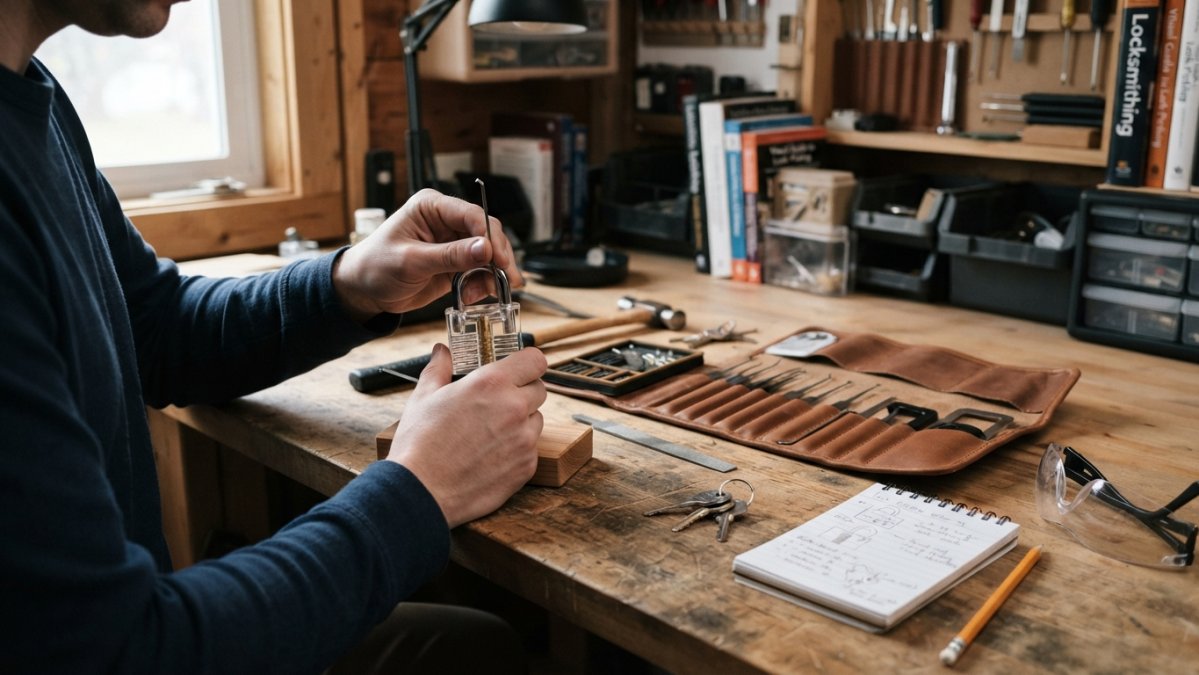
Start with a clear practice lock so you can watch the pins move, binding order, shear line, and how much tension is too much.
If you ever want to practice on a lock you do not own, get permission first. A written note or email from the owner is the cleanest protection you can have.
Choosing a Beginner Lock Pick Set for Legal Practice
A beginner lock pick set should be simple, durable, and used only on locks you own.
Here is what we would put in a starter setup:
- A pen-style pick tool for discreet, everyday practice on your own property.
- A clear practice lock so you can see what each pin does.
- A visual guide you can keep open on the desk while you practice.
Our own Dyno Kwick Pick pen-style 3-in-1 tool is built for exactly this: made in the USA, trusted by locksmiths for over 25 years, and beginner-friendly enough that you need no professional experience to start.

If you want to learn the mechanics properly, the Lock Picking Book - Beginners Visual Guide walks you through every step with 190 color illustrations. For hands-on work, the Dangerfield Repinnable Cutaway Practice Lock lets you change the pins and practice the same lock a thousand different ways. And if you are just starting, the 3 Clear Progressive Practice Locks Set gives you standard, spool, and serrated pins to grow into.

A common mistake is buying the cheapest set online and carrying it everywhere. Cheap picks bend, and carrying them without a reason creates needless legal risk.
Conclusion: Staying Legal While Learning Lock Picking
The legal side of lock picking comes down to a few habits: own your tools, practice on locks you own, get permission before touching anything else, and store your picks when you travel.
If you are ready to start the right way, Dyno Kwick Pick builds beginner-friendly tools designed for lawful practice. Our pen-style 3-in-1 design is discreet, durable, and made in the USA, with a satisfaction-first guarantee behind every tool.
Frequently Asked Questions
Is it illegal to learn how to lockpick?
Learning lock picking is not illegal in itself. The legality depends on what you do with the skill. If you practice on locks you own or have written permission to pick, you are generally within the law. However, if you use lock picking knowledge to attempt unauthorized entry, that becomes a criminal offense. Many hobbyists join locksport groups and practice on their own property without legal issues. Always check your state's specific statutes regarding burglary tools and intent before you start.
Can you legally own a lock pick set?
In most U.S. states, owning a lock pick set is legal. However, some states have laws that make possession illegal if there is intent to commit a crime. For example, if you are caught with lock picks while attempting to break into a building, you can face burglary tool charges. To stay compliant, keep your beginner lock pick set at home and only use it on locks you own or have permission to pick. Check your local jurisdiction for specific restrictions.
Can you carry lock picks in your vehicle?
Carrying lock picks in your vehicle is generally legal, but it can become problematic if law enforcement believes you intend to use them for illegal activity. Some states treat lock picks as burglary tools when transported with criminal intent. To reduce risk, store them securely and separately from any other tools that could be seen as break-in equipment. If you are a locksmith or hobbyist, keep documentation of your legitimate purpose, such as a membership card or practice log.
Do lock picking laws vary by state?
Yes, lock picking laws vary significantly by state. Some states have no specific statutes about lock picks, while others classify them as burglary tools and impose penalties for possession with intent to commit a crime. For example, states like California and New York have specific burglary tool laws. Always review your state's legal code or consult a local attorney to understand the rules that apply to you. This guide provides general guidelines, not legal advice.
0 commentaire