

Table of Contents
- What Makes Lock Tools Truly Discreet for Everyday Carry
- Quick Comparison: Dyno Kwick Pick Carry Options
- The Pen-Style Lock Pick Tool: Why It Beats a Traditional Pocket Lock Pick Set
- Pocket Lock Pick Set Carry Options: Pocket Clip, Key Ring, or Pouch
- Building a Lock Picking Kit for Beginners: What You Actually Need
- Are Lockpicks Illegal in the US? What Carriers Should Know
- Maintenance and Longevity: Keeping Discreet Lock Tools Field-Ready
- Conclusion: Choosing Your Everyday Carry Lock Tool
- Frequently Asked Questions
Last Updated: October 5, 2026
What Makes Lock Tools Truly Discreet for Everyday Carry
Discreet everyday carry lock tools are compact picking instruments designed to look and carry like ordinary pocket items, which is exactly why so many people now search for discreet everyday carry lock tools. At Dyno Kwick Pick, we have built pen-style tools for more than 25 years, and discretion comes down to three things: profile, retention, and how the tool sits against your body.

The best are slim enough to sit beside a pen in a shirt pocket, have a clip, ring, or lanyard point so they stay anchored, and open without drawing stares.
Quick Comparison: Dyno Kwick Pick Carry Options
The Dyno Kwick Pick line gives you four ways to build a discreet carry setup, depending on how you dress and where you keep your keys.
| Product | Price | Best For | Carry Style |
|---|---|---|---|
| Dyno Kwick Pick | $20.50 | First-time and daily carry | Pocket clip, pen-style |
| Kwick Pick Attachment Cap | $4.99 | Adding a ring or lanyard | D-ring, paracord, key ring |
| Dyno Kwick Pick Gift Set | $31.99 | Gifting and display | Wooden box, replacement rake |
| Replacement Tension Wrench | $5.99 | Restoring a worn setup | Tapered steel, wide lock fit |
| Replacement Snake Rake | $6.99 | Refreshing a raking tool | Stainless steel, 0.032 inch |
The base tool is the starting point, the attachment cap turns it into a keychain item, the gift set adds a presentation box, and the replacement parts keep a working setup alive.

The Pen-Style Lock Pick Tool: Why It Beats a Traditional Pocket Lock Pick Set
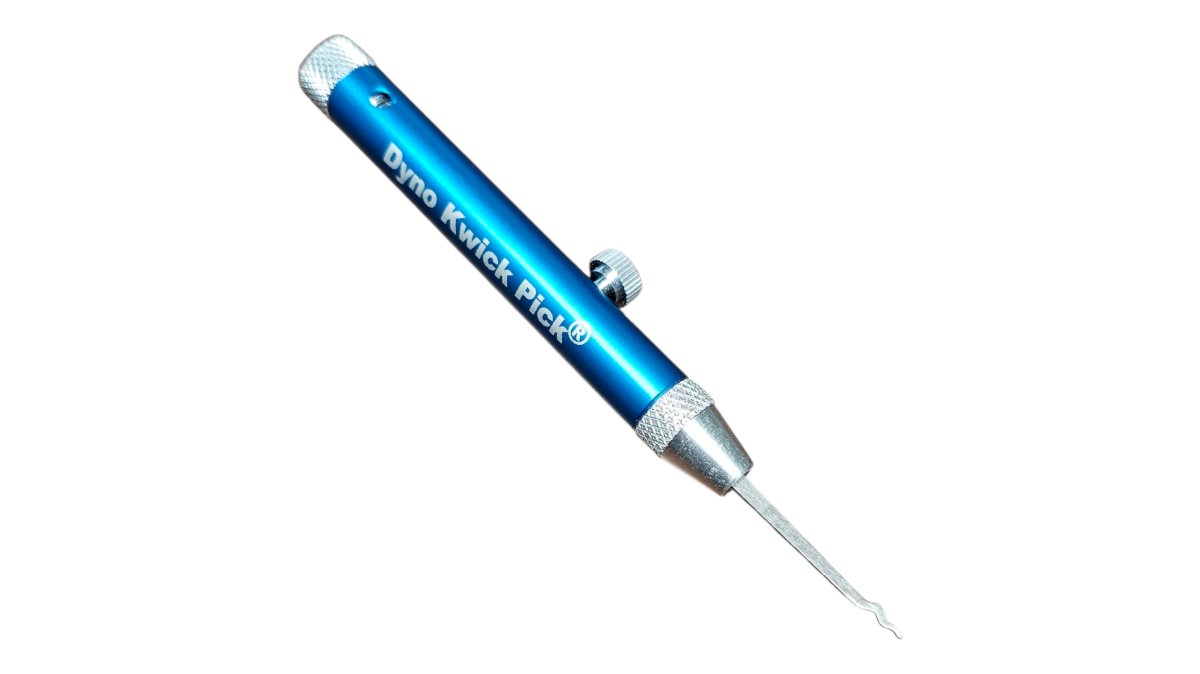
A pen-style lock pick tool carries like a pen, which is why it beats a traditional pocket lock pick set for daily use.
Traditional pocket sets trade portability for variety: more pick profiles, but also a pouch, a bundle of steel, and a bulge in your pocket.
The Dyno Kwick Pick is a 3-in-1 design, tool body, snake rake, and tension wrench, made in the USA from aluminum with a polished, corrosion-resistant finish.

Pocket Lock Pick Set Carry Options: Pocket Clip, Key Ring, or Pouch
Pocket clip, key ring, and pouch each solve a different problem, and the wrong choice is why most people stop carrying a pocket lock pick set. Match the method to your routine.
- Pocket clip: Fastest access. Sits in a shirt or pants pocket like a pen. Best for office and field work.
- Key ring: Hardest to lose. Add the Kwick Pick Attachment Cap and hang the tool with your keys. Best for people who already carry a key ring.
- Paracord or D-ring: Most secure retention. The attachment cap accepts paracord or a D-ring in seconds. Best for bags and belt loops.
The attachment cap installs in seconds and adds almost no bulk, for most people, the best upgrade to a discreet setup.
Building a Lock Picking Kit for Beginners: What You Actually Need
A lock picking kit for beginners needs less than most starter bundles suggest: one rake, one tension wrench, and a lock you own that you are allowed to practice on. Add tools only when you hit a lock your setup cannot handle.
Here is what we would put in a first kit:
- A pen-style pick with a snake rake and tension wrench, such as the Dyno Kwick Pick
- A practice lock you own and can legally open
- A spare rake and tension wrench so a worn part does not stop you
The snake rake is the right first pick for most beginners: forgiving, effective on many common locks, and it teaches how tension and rake motion work together.
Match the Tool to the Lock, Not the Other Way Around
Most beginner frustration comes from using the wrong tool on the wrong lock. A practical starting matrix:
| Lock type | What usually works | What to expect |
|---|---|---|
| Standard residential pin tumbler (KW1, SC1 keyways) | Snake rake plus light tension | Fast on worn or low-tolerance cylinders; slower on newer ones |
| Pin tumbler with security pins (spools, serrated) | Single-pin picking with a hook and steady tension | Raking often fails; expect counter-rotation and false sets |
| Wafer locks (file cabinets, some desk drawers) | Rake or a thin hook | Very tolerant; good early practice |
| Dimple and high-security keyways | Specialty picks not covered by a starter kit | Skip these until you have a dedicated tool and training |
| Padlocks with shrouded or restricted keyways | Bypass or shimming where lawful, otherwise skip | Picking may not be the right approach at all |
If your tool does not match the lock, more force will not fix it. Stop, reset tension, and reassess.
Safe, Non-Destructive Practice, and When to Walk Away
Practice should never damage the lock. A few habits keep you out of trouble:
- Use light tension. Heavy tension is the most common cause of bent rakes and marred keyways.
- Never force a pick past a binding pin. If it will not move, you are on the wrong pin or the wrong tool.
- Stop if you feel the cylinder bind unevenly or hear metal grinding. That is a sign you are about to damage the lock.
There are real limits to a starter kit. High-security cylinders, automotive locks, and many commercial padlocks resist beginner tools. If you are locked out of property you do not own, or the lock is on a door you are not authorized to open, call a licensed locksmith. Non-destructive entry is for locks you own or have written permission to open, not a substitute for professional service.
How We Evaluate Beginner Kits
We do not publish a ranked list of every kit on the market, and we will not pretend we tested them all. Here is how we evaluate our own tools and what we would look for in any beginner kit:
- Carry comfort: Does it sit flat in a pocket or on a key ring without snagging or rattling?
- Tension feel: Can a new user modulate tension without the wrench slipping out of the keyway?
- Rake durability: Does the rake hold its shape after repeated use on standard pin tumblers?
What we have not tested: dimple picks, tubular picks, automotive tools, and bypass tools outside our own line. Treat any kit claiming to handle those as unverified until you see independent testing.
Are Lockpicks Illegal in the US? What Carriers Should Know
Lockpick legality in the US depends on state law and intent, with no single national rule. Some states restrict possession outright, and many tie the offense to intent to commit a crime. Check your state's statute before you carry.
The practical rules we give customers are simple:
- Know your state law before you carry, not after
- Carry only for lawful use on property you own or are authorized to open
- Do not carry tools you cannot explain if asked
How Intent Statutes Actually Work
Most state laws do not ban lock-picking tools by themselves; they ban possession under circumstances suggesting criminal purpose. The same tool can be lawful in one situation and a problem in another. The factors that matter:
- Where you are. Possession in your own home or vehicle is treated differently from possession while loitering near a locked business after hours.
- What else you have. Tools combined with other items associated with burglary draw more scrutiny than a single pen-style pick on a key ring.
- What you say. A clear, truthful explanation of why you carry the tool, locksmith work, hobby practice on your own locks, property management, matters more than most carriers realize.
A common pattern is to treat possession as a misdemeanor when intent to commit a crime is present, escalating to a felony alongside other burglary-related conduct. Classification, penalties, and definitions vary widely, so your state's criminal code is the only reliable source.
Consent and Responsible Use
Legality is the floor, not the ceiling. Responsible carry means:
- Own or have written permission. If you do not own the lock and you do not have documented permission, do not pick it, even as a demonstration.
- Get it in writing for work. Property managers, landlords, and employers should authorize lock work in writing, with a scope that names the locks involved.
- Do not demonstrate in public. Picking a lock in a lobby, parking garage, or retail setting, even your own, invites exactly the wrong interpretation.
Federal and Travel Considerations
Federal law also matters for some carriers. Federal statute on possession of motor vehicle master keys and lock-picking tools restricts certain tools in specific contexts, so it is worth reading the actual text rather than relying on forum posts. For state-level detail, the National Conference of State Legislatures overview of state criminal codes is a useful starting point, but your state's own code is the final word.
If you fly, TSA rules and airline policies govern carry-on versus checked bags, separate from state possession law. If you drive across state lines, the law of the state you are in at the time applies, not where you started.
Maintenance and Longevity: Keeping Discreet Lock Tools Field-Ready
A discreet lock tool only helps if it still works when you reach for it, and maintenance separates a tool that lasts for years from one that fails in a parking lot. The routine takes minutes and almost no equipment.
- Wipe the tool after use. Skin oils and grit wear the finish and slow the action.
- Keep the finish intact. A polished, corrosion-resistant finish is your first defense against rust.
- Check the rake for bends. A bent snake rake loses its feel and its speed.
The replacement parts exist for exactly this reason: a worn tension wrench or flattened rake is a cheap fix, not a reason to replace the whole tool.
Conclusion: Choosing Your Everyday Carry Lock Tool
The hard part of carrying lock tools is not picking the tool.
At Dyno Kwick Pick, we build a pen-style 3-in-1 tool trusted by locksmiths for over 25 years. It is made in the USA, carries like a pen, and is beginner-friendly enough to learn on.
Get started with Dyno Kwick Pick and carry a tool that stays discreet, stays ready, and stays with you.
Frequently Asked Questions
Are lockpicks illegal in the US?
There is no federal law banning lock picks. Legality is set by state and local rules, and most states allow possession. Some states, including Virginia and Mississippi, restrict possession to locksmiths or require a license. Nevada and Ohio have narrower rules. Carrying lock picks while committing a crime is a separate offense in many states. Check your state statute before buying.
What should I look for in an everyday carry lock picking kit?
Prioritize portability, build quality, and tool variety. A pen-style tool with a pocket clip sits flat in a pocket and looks like a pen. Check the material: aluminum bodies with corrosion-resistant finishes hold up better than thin stamped steel. Look for replaceable rakes and tension wrenches so one worn part does not retire the whole tool. The Dyno Kwick Pick includes a snake rake, tension wrench, and an instruction guide at $20.50.
Are pen-style lock pick tools practical for everyday carry?
Yes, for light to moderate use. The pen-style lock pick tool format keeps the rake and tension wrench in one slim body, so nothing rattles loose in your pocket. The Dyno Kwick Pick measures like a pen and clips the same way, which makes it discreet at a front desk or in a maintenance bag. Add the $4.99 Attachment Cap if you want a D-ring or key ring anchor instead of the clip.
How do I carry lock tools responsibly?
Carry them only for locks you own or are authorized to open, such as your own cabinets, storage unit, or work equipment. Keep the tool concealed and do not use it on property you do not control. If you are locked out of a home or vehicle, call a licensed locksmith rather than attempting entry. Knowing your state law and carrying documentation for work use, like a locksmith license or employer letter, reduces misunderstandings.
How often should I replace the rake or tension wrench?
Inspect the rake tip for bends or burrs after heavy use. The Dyno Kwick Pick replacement snake rake is stainless steel at 0.032 inch and costs $6.99, while the tapered steel tension wrench is $5.99. Both are made in the USA and fit the standard Dyno Kwick Pick body. Keeping a spare rake in your bag means a worn tip never stops a job mid-shift.
0 commentaire