

Last Updated: October 23, 2026
Quick Summary
Progressive training locks are practice locks that let you change the number of pins inside the cylinder, so one lock grows from a two-pin beginner exercise into a full six-pin challenge. We recommend them as the single best investment a new picker can make, because they solve the problem that stops most people: practicing on the same lock until it becomes muscle memory instead of skill.
- Start with one or two pins to learn tension control, then add pins as your feedback reading improves.
- Two pins teach tension control and the feel of a single set; three and four pins introduce binding order.
- Move the new pin to a different chamber each session so you find the binding pin by feel.
- The Dangerfield Repinnable Practice Lock Kit costs $47.99 and includes 30+ standard, spool and serrated pins.
- Do not advance on a lucky open; advance on repeatability, and drop one pin count if you fail a milestone twice.
Table of Contents
- What Progressive Training Locks Are and Why They Work
- How Changing Pin Counts Changes Difficulty
- Best Progressive Lock Picking Practice Sets Compared
- Lock Picking Training Locks for Beginners: How to Choose
- Why a Clear Practice Lock Accelerates Learning
- Lock Picking Training Exercises for Skill Building
- A Structured Progression Plan with Milestones
- Safe, Lawful, and Ethical Practice Boundaries
- Frequently Asked Questions
What Progressive Training Locks Are and Why They Work
Progressive training locks are practice locks that let you change the number of pins inside the cylinder, so one lock can grow from a two-pin beginner exercise into a full six-pin challenge.
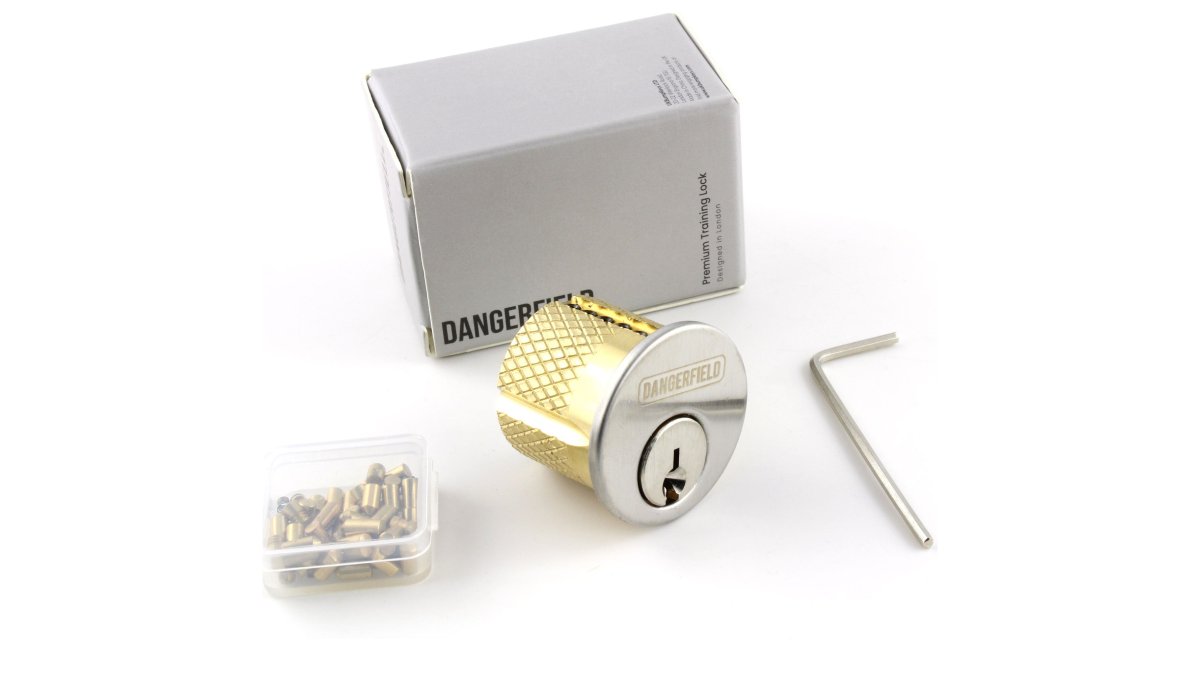
A standard practice lock teaches you to open one lock. You will get fast at it and learn almost nothing transferable.

Progressive locks fix that by letting you repin the cylinder in minutes. Start with one or two pins to learn tension control. Add pins as your feedback reading improves.
Pin-Tumbler Basics: What You Are Actually Manipulating
A pin-tumbler lock is a cylinder containing a rotating plug drilled with pin chambers.
When you insert the correct key, every key pin tops out exactly at the shear line and the plug rotates.
Everything else builds on that one principle: one binding pin at a time. If you cannot feel which pin is binding, you are not picking, you are guessing.
How Changing Pin Counts Changes Difficulty
Pin count is the difficulty dial, and it works on two levels. More pins means more binding events to track and a longer sequence to hold in memory, plus more chances to overset a pin you already set while working on a later one.
Two pins teach tension control and the feel of a single set. Three and four pins introduce binding order: the sequence is no longer obvious, and you must test each pin to find the binder. Five and six pins add endurance and precision, because a small tension slip late in the sequence can drop everything you have already set.
Security pins change the difficulty differently. A spool pin false-sets, meaning the plug rotates further than it should and feels open when it is not. A serrated pin gives multiple false sets on a single pin.
Progression from Fewer Pins to More Pins
The progression that works is boring and reliable:
- One pin. Learn what a set feels like. No tension variation, no binding order.
- Two pins. Learn to identify the binding pin and hold the first set while setting the second.
- Three pins. Binding order becomes real. Test each pin before committing.
- Four pins. Build consistency. Aim for repeatable opens, not lucky ones.
- Five to six pins. Full real-world difficulty. This is where patience gets tested.
- Security pins. Add spools, then serrated, one chamber at a time.
Best Progressive Lock Picking Practice Sets Compared
Three options cover nearly every learner, and they differ mainly in how much reconfiguration you get. The table below is our honest read on which one fits which stage.
| Product | Price | What Makes It Progressive | Best For |
|---|---|---|---|
| Dangerfield Repinnable Practice Lock Kit | $47.99 | 6-pin mortise cylinder, 30+ standard, spool and serrated pins, grub screws for fast repinning | Learners who want one lock that grows with them |
| Dangerfield Repinnable Aluminum Cutaway | $69.99 | Cutaway body plus full repinning, so you can see and feel each change | Visual learners and anyone debugging their technique |
| Dangerfield EUREKA 3-Lock Clear Set | $49.99 | Three fixed clear locks: standard, all-spool, all-serrated | Pickers drilling security pins specifically |
The Repinnable Practice Lock Kit is our top pick for most people.

The Aluminum Cutaway costs more, and here is why it earns that: every cut edge is beveled, so you can hold and inspect it without shredding your fingers.
The EUREKA Clear Set takes a different approach.
Lock Picking Training Locks for Beginners: How to Choose
Choose based on your learning goal, not on the biggest pin count. A beginner who wants to understand the mechanics should start with a cutaway or clear lock; one who wants transferable feel should start with a repinnable cylinder and one pin.
Ask three questions before buying:
- Can I change the pin count? If no, it is a single-lock trainer, not a progressive one.
- Does it include security pins? You will want spools eventually. Buying them separately usually costs more.
- Is the format realistic? A mortise cylinder or standard keyway teaches skills that transfer. An oddball trainer teaches you to pick that trainer.
One more consideration that rarely gets mentioned: your hands. Cheap cutaways are stamped with sharp edges, and you will be holding the thing for hours. Beveled cuts and a bit of weight in the hand matter more than most buyers expect.
If you are completely new, pair the lock with structured instruction rather than random YouTube sessions. Our Lock Picking Book - Beginners Visual Guide uses 190+ color diagrams to show the pin stack, binding order and shear line as you work, which shortens the "what am I even feeling" phase considerably.
Practice Lock, Repinnable, Progressive, Aluminum, Cutaway Training →
Why a Clear Practice Lock Accelerates Learning
A clear practice lock is a transparent acrylic lock that lets you watch every pin move while you pick.
The reason this matters is feedback latency. With a metal lock, you feel something and then guess what caused it.
What most guides miss is that clear locks have a ceiling. Acrylic feels different from metal, wears faster, and gives slightly muted feedback.
Lock Picking Training Exercises for Skill Building
Structured drills beat freeform picking, and the difference shows up within a week. Set a timer, pick one drill per session, and log what failed.
Single-Pin Picking Drills
Single-pin picking means setting one pin at a time with light, steady tension, and it is the foundation every other technique rests on.
- The one-pin hold. Pin the lock with one pin. Set it, release tension, repeat 20 times. You are training your tension hand, not your pick hand.
- Binding order mapping. With three pins, test each pin and say out loud which one binds first. Verify by setting it. Repeat until you call the order correctly three sessions running.
- The overset recovery. Deliberately overset a pin, then release tension just enough to drop it without losing the others. This is the single most useful recovery skill in real locks.
- Light tension drill. Pick a four-pin configuration using only the minimum tension that still binds a pin. Heavy tension hides feedback; this drill exposes it.
Picking Without Looking
Picking without looking is the skill that separates practice from performance. On real locks you cannot see the pins, so blind practice is not optional.
Cover the lock, or use a metal cylinder where visibility is not an option. Start at two pins, then work up. The goal is not speed but identifying the binding pin by feel alone and recognizing a false set without visual confirmation.
A Structured Progression Plan with Milestones
Most people practice without milestones, which is why progress stalls. Use this four-week plan and move on only when you hit the milestone, not when the calendar says so.
| Week | Configuration | Drill Focus | Milestone to Pass |
|---|---|---|---|
| 1 | 1-2 standard pins | Tension control, single set feel | 20 clean single-pin sets in a row |
| 2 | 3-4 standard pins | Binding order, overset recovery | Call binding order correctly 3 sessions running |
| 3 | 5-6 standard pins | Consistency, blind practice | 5 consecutive opens with the lock covered |
| 4 | Add spools, then serrated | Counter-rotation, false set recognition | Open a mixed security-pin config twice in 10 minutes |
Two rules keep this honest. Do not advance on a lucky open; advance on repeatability. And if you fail a milestone twice, drop one pin count and rebuild. That is not regression, it is maintenance.
The Dangerfield Repinnable Practice Lock Kit at $47.99 maps directly onto this plan, since it ships with standard, spool and serrated pins plus spare springs and stoppers. If you prefer to see the mechanism while you work through week four, the Repinnable Aluminum Cutaway at $69.99 gives you the same repinning flexibility with full visibility.
Safe, Lawful, and Ethical Practice Boundaries
Practice locks are legal to own in most places, but picking tools and picking activity are governed differently depending on where you are, and several jurisdictions restrict possession of picks outside a locksmith context.
The practical boundaries matter just as much:
- Only pick locks you own or have explicit written permission to pick. A rental unit, a workplace cabinet or a neighbor's storage unit is not yours.
- Never pick a lock that is in use or that secures someone else's property, even as a demonstration.
- Do not carry picks where they could be misread. A pen-style tool is discreet for a reason; treat that discretion as a responsibility.
Lock sport communities generally hold to the same ethic: you pick what you own, you do not damage what you do not own, and you do not teach shortcuts to people who have not asked for permission.
The hardest part of learning to pick is not the tools, it is knowing whether you are actually improving or just getting comfortable. If you want one tool that carries you from your first single-pin set to mixed security pins, our Practice Lock Kit at $47.99 is where we would start, and the EUREKA clear set at $49.99 is the right companion if you want to see what you are feeling.

Frequently Asked Questions
Are progressive training locks good for beginners?
Yes. Progressive training locks let you start with one or two pins and add more as your tension control and feedback reading improve. That staged difficulty prevents the frustration of facing a full six-pin lock on day one. The Dangerfield Repinnable Practice Lock Kit, for example, lets you remove all but one chamber, so you can build muscle memory before adding complexity.
What should I learn before moving to a more difficult training lock?
Before adding pins or security pins, you should reliably open your current configuration five times in a row without looking at the lock. You should also be able to feel and identify the binding pin and maintain light, steady tension. If you still overset pins or lose tension mid-pick, stay on the current setup until those habits are solid.
Are clear practice locks useful for learning lock picking?
Clear practice locks show you exactly what happens inside the lock as you pick. You can watch the binding pin set, see a spool pin false set, and understand counter-rotation visually. The Dangerfield EUREKA set includes three clear locks with standard, spool, and serrated pins, so you can connect what you feel with what you see before moving to opaque locks.
How do you practice lock picking safely and legally?
Practice only on locks you own or have explicit permission to pick. Never pick a lock that is in use or that you do not own. Check your state and local laws, because some areas restrict possession of lock picks. Keep your practice locks labeled and stored separately from any installed hardware, and avoid discussing or demonstrating picking techniques on property that is not yours.
What locks are best for lock-picking practice?
Repinnable training locks and progressive sets are best because they let you control difficulty. A mortise cylinder kit with standard, spool, and serrated pins covers foundational and advanced skills. Clear acrylic locks help beginners see the mechanism. Avoid picking locks that are installed in doors or that you do not own, and avoid cheap cutaway locks with sharp edges that can cut your fingers.

0 comments