

Table of Contents
- Quick Comparison: 5 Best Practice Locks for Beginners
- 1. Dangerfield EUREKA Training Lock Set: Best Progressive Clear Locks
- 2. Dangerfield Clear Practice Locks (3): Best Variety for Visual Learners
- 3. Dangerfield Repinnable Cutaway Lock: Best for Long-Term Skill Building
- 4. Dangerfield Mortise Repinnable Lock Kit: Best Value Pin Kit
- 5. Dyno Kwick Pick: Best Companion Tool for Beginners
- Essential Features to Look for in Practice Locks
- Beginner Lock Picking Techniques to Practice
- Frequently Asked Questions
Last Updated: September 25, 2026
Quick Comparison: 5 Best Practice Locks for Beginners
The best practice locks for beginners combine clear visual feedback with progressive difficulty, and the Dangerfield EUREKA Training Lock Set delivers exactly that. This guide from Dyno Kwick Pick breaks down five options that take you from your first pick to confident single-pin work on security pins.

| Practice Lock | Price | Type | Best For |
|---|---|---|---|
| EUREKA Training Lock Set | $49.99 | Clear progressive (3 locks) | Learning binding order and security pins |
| Clear Practice Locks (3) | $54.99 | Acrylic padlock, double-sided, crystal | Visual learners who want variety |
| Repinnable Cutaway Lock | $69.99 | Aluminum cutaway | Long-term skill building |
| Mortise Repinnable Lock Kit | $47.99 | Repinnable pin kit | Best value for endless configurations |
| Dyno Kwick Pick | $20.50 | Pen-style pick tool | Companion tool for everyday carry |
1. Dangerfield EUREKA Training Lock Set: Best Progressive Clear Locks
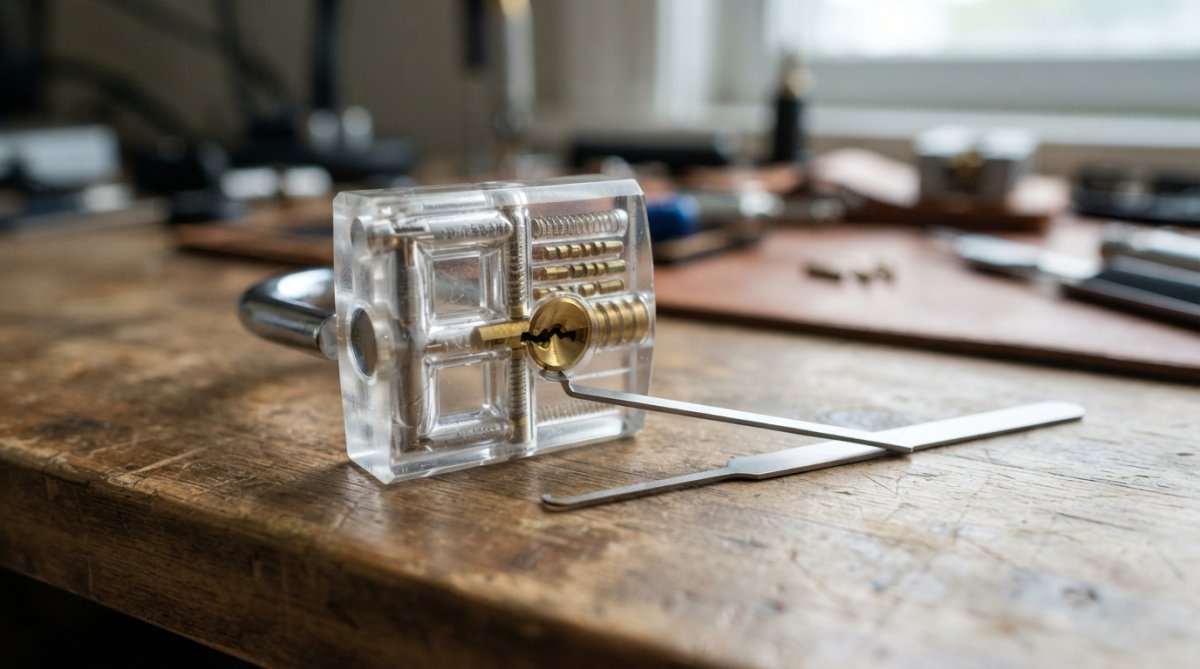
The EUREKA set is a strong starting point for learning to read pin feedback. Three clear acrylic locks each contain a different pin type: standard, spool, and serrated. Watching every pin move makes the binding pin principle click faster than any video tutorial.
Pros:
- Complete visibility into pin movement
- Three distinct pin types in one box
- Moderate Schlage keyway builds transferable skill
Cons:
- Acrylic scratches over time with heavy use
2. Dangerfield Clear Practice Locks (3): Best Variety for Visual Learners
This three-lock box delivers variety: a clear padlock, a double-sided practice lock, and a crystal-clear lock, each with its own key set.
Pros:
- Three different lock formats in one set
- Individual keys identify which pins you're working
- Sturdy acrylic holds up well
Cons:
- No security pins included, so you'll need a second set later
3. Dangerfield Repinnable Cutaway Lock: Best for Long-Term Skill Building
The repinnable cutaway is a durable lock. Made from brushed aluminum with beveled edges on every cut, it lets you see inside while you pick, then swap pins in seconds using the included hex key and grooved tweezers.

Pros:
- Real lock, not a toy, so skills transfer directly
- Beveled edges are safe to handle for long sessions
- Repinnable with a wide selection of spare pins
Cons:
- Heavier than acrylic options, less suited to travel
4. Dangerfield Mortise Repinnable Lock Kit: Best Value Pin Kit
This kit offers many configurations. The kit ships with a 6-pin mortise cylinder and 30+ pins spanning standard, spool, and serrated types, plus spare springs and stoppers.
Pros:
- 30+ pins included, more than most kits
- Billions of possible pin combinations
- Mortise format matches real-world locks
Cons:
- Requires patience to repin between sessions
5. Dyno Kwick Pick: Best Companion Tool for Beginners
A practice lock is only half the equation. You need a pick that won't fight you while you're learning to feel feedback, and the Dyno Kwick Pick is designed for simple, reliable, and effective security solutions. This pen-style 3-in-1 tool has been trusted by locksmiths for over 25 years and is made in the USA from polished, corrosion-resistant aluminum.
Pros:
- Beginner-friendly with minimal technique required
- Durable aluminum construction
- Discreet pen-style design
Cons:
Lock Picking Book - Beginners Visual →
- Raking-focused, so pair it with a hook pick for advanced security pins
Essential Features to Look for in Practice Locks
The right practice lock shows you what is happening inside while still demanding real technique. Four features to consider are progressive pinning, security pin variety, a visibility format, and a smooth mechanism.
Progressive Pinning: The Feature That Actually Teaches
Progressive pinning means the lock can be loaded with fewer pins than its full capacity, so you can start with one or two and add more as your skill grows. This can help beginners stick with the hobby. A five-pin lock handed to a first-timer can be frustrating; the same lock pinned to two standard pins can be a lesson in tension control.
A workable progression looks like this:
- Week 1, two standard pins. Goal: feel the binding pin and set it without oversetting the other. If you cannot open this consistently, more pins will not help.
- Week 2, three standard pins. Goal: identify binding order rather than guessing. Say the order out loud before you pick.
- Week 3, four standard pins. Goal: maintain light, constant tension. Many beginners use too much tension here and may not notice.
- Week 4, five standard pins. Goal: open the lock three times in a row without resetting your technique between attempts.
- Week 5 and beyond, introduce one spool pin, then two. Goal: recognize the false set and manage counter-rotation without dropping tension.
Security Pins: Spools, Serrated, and What They Teach
Security pins exist to defeat certain picking approaches. For a beginner, they can be effective teachers because they help break habits that don't work on more complex locks.
Clear vs. Cutaway vs. Repinnable: Choosing by What You Need to See
Clear acrylic locks offer full visibility, you watch every pin, spring, and driver move in real time. They wear faster and usually cannot be repinned, but nothing else teaches binding order as fast. Buy one as your first lock, not your only lock.
Maintenance: The Feature Nobody Mentions
A practice lock that binds, grinds, or sticks can teach bad habits. Most beginners assume they are failing at picking when the lock is actually mechanically jammed.
- Lubricate sparingly. A single drop of light machine oil or a dry graphite lubricant in the keyway every few weeks is enough. Over-oiling attracts dust and makes pins sluggish.
- Wipe the pins when you repin. Handling leaves skin oils on pins and springs. A clean paper towel and a few seconds of wiping keeps the mechanism consistent.
- Never force a stuck pin. If a pin will not move with normal pressure, release tension completely, reinsert the key, and turn it to reset the stack. Forcing it bends springs and scores the plug.
- Store acrylic locks away from heat. Acrylic softens and warps in a hot car, which changes the pin tolerances permanently.
Beginner Lock Picking Techniques to Practice
Technique is built in drills, not marathon sessions. Beginners can improve by practicing deliberately in short blocks, tracking what they did, and stopping when their hands get sloppy.
The Core Drills, In Order
Drill 1, Tension control on two pins. Insert your tension wrench and apply just enough pressure to keep it from falling out. Pick each pin one at a time; if you overset one, release tension and start over. Repeat until you can open the lock five times in a row without oversetting.
When a Pin Feels Stuck: Troubleshooting Before You Blame Yourself
Beginners may quit over mechanical problems they mistake for personal failure. Before blaming your technique, rule these out:
- The pin is overset. Release tension completely, reinsert the key, and turn it. If the lock opens with the key, the pin was overset, not stuck. Reset and try again with lighter tension.
- The pin is jammed against the shear line. This happens when you push a pin too far and the driver pin wedges. Same fix: reset with the key. Never force it with the pick.
- The spring is bound. If a pin will not return when you release pressure, the spring may be compressed or misaligned. Repin the lock or, on a non-repinnable lock, retire it.
- The lock is dirty or dry. A drop of light lubricant in the keyway and a few key turns will usually restore smooth feedback.
- The tension wrench is slipping. If your wrench rotates without resistance, it is not engaging the plug. Try a different wrench thickness or a top-of-keyway versus bottom-of-keyway position.
Hitting the Plateau: What It Means and How to Break It
Every beginner hits a plateau. It is normal, and it is almost always one of three things:

- You are practicing the same configuration too long. If you can open a lock ten times in a row, it has stopped teaching you. Add a pin or swap in a security pin.
- You are using too much tension. This is a common plateau cause. Try picking with the lightest tension you can manage, just enough to feel the pins bind. Many beginners are surprised at how little is needed.
- You are practicing tired. Sloppy repetitions reinforce sloppy habits. Stop when your hands get heavy.
Transitioning from Clear Locks to Real Locks
The clear lock is a teaching tool, not a destination. The transition to real locks is where most beginners get discouraged, because real locks give no visual feedback and often have tighter tolerances.
A workable transition path:
- Step 1, Cutaway lock. Same pins, less visibility. You still see the stack, but you have to rely more on feel.
- Step 2, Repinnable lock with the window covered. Tape over the cutaway window or use a solid-side lock pinned to a known configuration. Now you are picking blind but with pins you chose.
- Step 3, A cheap hardware store padlock. These typically have standard pins and loose tolerances, which makes them forgiving. Pick one up and treat it as a real-world test.
- Step 4, A lock with one security pin. Most residential locks now include at least one spool or serrated pin. This is where your spool drill pays off.
Frequently Asked Questions
What is the best lock pick set for a beginner?
For beginners, a basic set with a few picks and tension wrenches works well. The Dyno Kwick Pick is a popular starting tool because its pen-style design is discreet and easy to carry. Pair it with practice locks like the Dangerfield EUREKA set to build skills. Focus on single-pin picking and tension control before moving to advanced techniques. Many beginners also benefit from an illustrated guide to understand what happens inside the lock.
Are practice locks necessary for learning how to pick locks?
Practice locks are not strictly required, but they speed up learning significantly. Clear and cutaway locks let you see the pins, binding order, and shear line as you work. This visual feedback helps you connect feel with mechanics. Repinnable locks like the Dangerfield Mortise Kit let you change pin configurations, so you can practice progressively. Without practice locks, you might struggle to understand why a pick works or fails.
What is a cutaway lock and why is it used for training?
A cutaway lock has a section of its housing removed to expose the internal pin stacks. This lets you watch how key pins, driver pins, and springs interact with your pick. Cutaway locks are often made from real locks, so they feel like the real thing. The Dangerfield Repinnable Cutaway Lock is a good example: it has beveled edges for comfort and can be repinned to create new challenges. Use it to learn binding order and security pins.
What are the golden rules of lock picking?
Start with light tension; too much pressure binds pins and makes feedback unclear. Work one pin at a time, listening and feeling for the set. Be patient and avoid forcing. Practice on locks you own or have permission to pick. Learn the legal guidelines in your area. Use quality tools and practice locks to build muscle memory. Finally, keep a log of what works and what doesn't to track progress.
What locks do locksmiths recommend for practice?
Locksmiths often suggest starting with clear acrylic locks to see the mechanics, then moving to cutaway or repinnable locks for realistic feel. The Dangerfield EUREKA set includes standard, spool, and serrated pins for progressive learning. Repinnable kits like the Dangerfield Mortise Kit let you customize pin configurations. Avoid cheap, poorly made locks that jam easily. A good practice lock should have smooth operation and be repinnable for long-term use.
0 comments