

Quick Summary
Seven essential locksmith tools for residential lockouts cover three jobs: reading the lock, manipulating the pins, and opening the door without damage. Picks and tension wrenches form the core, rakes speed entry on standard cylinders, and bypass tools handle spring latches where picking is impractical.
- Tension wrenches and picks form the core of most residential lockout work.
- Use light, steady tension, because heavy pressure binds every pin and stops them setting.
- Raking works best on standard pin tumbler locks and often fails on security pins.
- Bypass tools target spring latches, not deadbolts fully extended into the strike.
- Check local and state licensing rules before carrying lock tools for professional work.
Table of Contents
- Why the Right Locksmith Tools Matter for Residential Lockouts
- Tension Wrenches and Picks: The Core of Residential Lockout Work
- Raking Tools for Fast Entry on Standard Pin Tumbler Locks
- Residential Lockout Bypass Techniques and the Tools They Require
- Building a Professional Locksmith Tool Belt Essentials Kit
- Legal Requirements for Locksmith Tools in the United States
- Choosing Your First Set and Next Step for Your Locksmith Kit
- Frequently Asked Questions
Why the Right Locksmith Tools Matter for Residential Lockouts
Last Updated: November 4, 2026
Most residential lockouts take minutes to solve when the technician carries the right tools. The wrong tools, or no tools at all, turn a simple entry into a damaged door and a longer wait. At Dyno Kwick Pick, we build our pen-style tools for residential lockout work.
A locksmith's kit has to handle three jobs: reading the lock, manipulating the pins and opening the door without damage. Each job calls for a different tool. A pick and tension wrench handle pin manipulation. A rake speeds up entry on simpler cylinders. Bypass and extraction tools cover the cases where picking is not practical.
Choosing the right tool is also a matter of fit. The tool has to suit the lock you are facing and the setting you are working in.
This guide covers seven essential tools, how each is used, and the practical points that decide whether a kit works in the field. It also covers the legal rules that apply to carrying lock tools in the United States.
Tension Wrenches and Picks: The Core of Residential Lockout Work
Tension wrenches and picks form the core of most residential lockout work. A tension wrench applies light rotational pressure to the plug, while a pick lifts the pins one at a time until each sets at the shear line. The combination is slow to learn and fast in experienced hands.
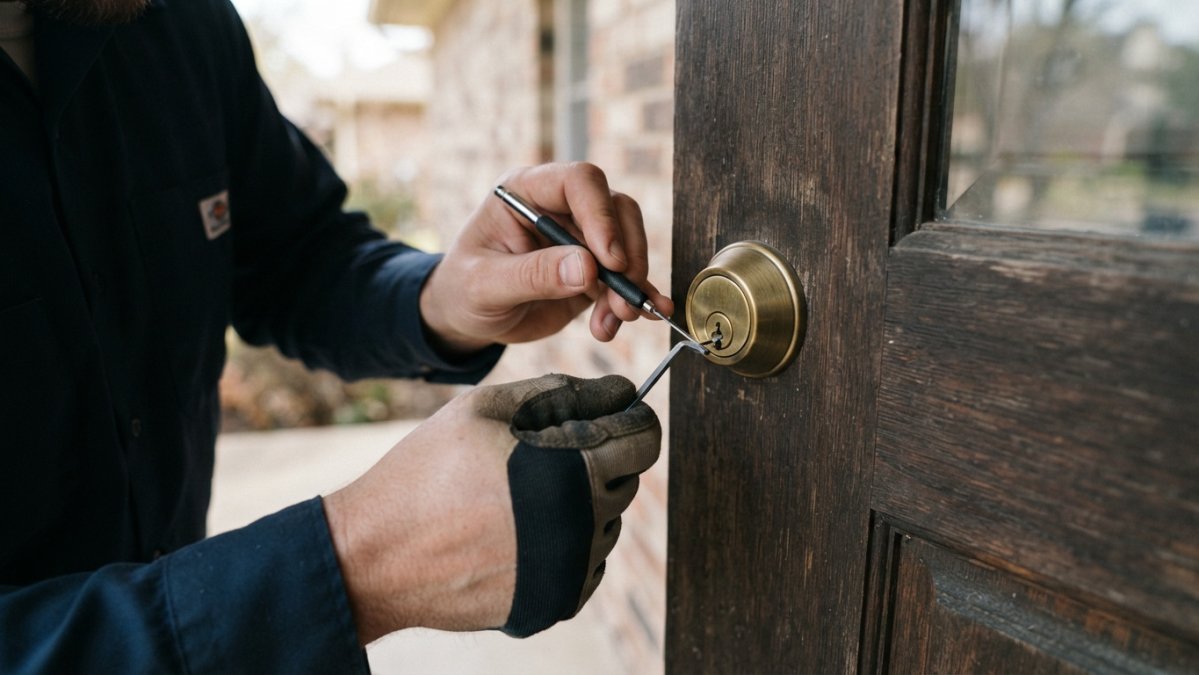
The Dyno Kwick Pick puts a pick, a snake rake and a tension wrench into one pen-style body, so the core tools travel together. The Replacement Tension Wrench is also sold separately at $5.99 if you need a spare.

A common mistake is using too much tension. Heavy pressure binds every pin at once and stops the pins from setting. Light, steady pressure lets one pin bind at a time, which is what the technique depends on.
Best for: technicians who need core picking tools in a compact, pocket-sized kit.
Skip if: you only need a single bypass tool for one specific door type.
Raking Tools for Fast Entry on Standard Pin Tumbler Locks
Raking moves a tool in and out of the keyway while applying tension, bouncing the pins until they set by chance. It works best on standard pin tumbler locks that have not been fitted with security pins. On those locks, raking can open a door in seconds.
The Dyno Kwick Pick includes a stainless steel snake rake, which is also sold as a replacement at $6.99. The replacement snake rake is listed as a stainless steel, spring-loaded fit built for fast raking.
Raking is not a universal shortcut. Locks with spool or serrated security pins resist raking, so the technician must be ready to switch to single-pin picking.
Best for: quick entry on common residential cylinders.
Skip if: the lock is clearly fitted with security pins, since raking will often fail.
Residential Lockout Bypass Techniques and the Tools They Require
Bypass techniques open a lock without picking every pin. On residential doors, the weak point is usually the latch or the strike, not the cylinder, so bypass tools target the gap between the door and the frame rather than the keyway. This is the area where generic locksmith guides blur auto and residential work; the tools below are the ones that actually show up on residential lockout calls.
Latch shims and credit-card sets. A thin, flexible shim slides between the door and the jamb and rides the angled face of the spring latch back into the door. Plastic credit-card sets work on the same principle and are the least damaging option on a slammed interior door. They fail on deadbolts, on doors with tight weatherstripping, and on latches seated deep behind a rabbeted jamb.
Under-door tools. A long, angled rod reaches under the door to hook the latch or the interior handle. These are useful on commercial-style exit devices and on some residential lever handles, but they need clearance under the door and a latch that can be pulled rather than pushed.
Deadbolt bypass tools. Residential deadbolts are not bypassed at the latch; they are attacked at the cylinder (picking, bumping, or impressioning) or at the strike side with a shim only when the bolt is not fully seated. A deadbolt that is fully extended into the strike is a picking or drilling job, not a bypass job.
Door-frame and strike-side tools. A latch that is accessible from the strike side can sometimes be released with a shim or a thin pry tool, but this risks bending the strike and damaging the frame.
Before attempting a bypass, check how the door is locked and whether the latch sits in a strike plate that can be reached. A tool that works on a spring latch may do nothing on a deadbolt, and forcing a bypass on the wrong hardware is how doors and frames get damaged.
Watch out: bypass should not be used on doors you do not own or have authority to open. Document the entry and get proof of residence or authorization before starting any job.
Best for: spring latch doors where the cylinder is not the problem.
Skip if: the door is a deadbolt or the strike side is inaccessible.
Practice Locks for Building Bypass Skill
Practice locks let you build feel and technique before working on a real door. Clear acrylic locks show exactly how each pin moves, which speeds up learning. The Practice Locks Set, 3 Clear Progressive Locks - Easy to Hard costs $49.99 and includes standard, spool and serrated pin locks, each on a Schlage keyway.
A repinnable mortise practice lock lets you change the pin configuration as your skill grows. The Dangerfield Repinnable Practice Lock Kit with 30+ pins is priced at $47.99.
Practice first on a locked, safe bench setup. Real-world skill comes from repetition, not from one successful try.
Best for: building feel and technique before field work.
Skip if: you need a finished tool for field use rather than training.
Building a Professional Locksmith Tool Belt Essentials Kit
A working kit balances coverage with weight. Start with the core picking tools, add a rake and a bypass option, and then add the tools that match the locks you service most often. Carry spares for the parts that wear first, such as tension wrenches.
The Kwick Pick Set costs $39.00 and pairs the everyday Dyno Kwick Pick with the slim Dyno Stealth, which reaches smaller and restrictive keyways. Together they cover standard and small keyways in pocket-sized form.

Budget vs. professional tiering. Most residential lockout work does not require a full professional roll. A beginner or part-time technician can cover the majority of residential calls with a pen-style 3-in-1 tool, a spare tension wrench, a rake, and a latch shim set. Step up to professional-tier tools when you are servicing security-pin cylinders, restrictive keyways, or high-volume repeat clients, where a failed pick costs a callback.
Tool bag organization. Organize by job, not by brand: one pouch for picking and tension, one for bypass and shims, one for extraction and spares. The pro setup guide walks through how to organize and carry your tools step by step. A tool you cannot find in the dark, on a doorstep at night, is no use to you.
Maintenance and longevity. Picks and tension wrenches last longer with a simple routine. Wipe grit and graphite off after every job, store the kit dry, and inspect tips for burrs or bends before each shift. A worn tension wrench slips under load and can scratch the keyway; replace it before it starts to slip.
Ergonomics and injury prevention. Locksmithing is repetitive strain work. Choose handles with a diameter that fills your hand, alternate grip between thumb and index tensioning, and take short breaks on multi-lock jobs. Most practitioners find that a pen-style tool reduces wrist strain on quick residential calls, while a full-handle pick is easier on the fingers during longer picking sessions.
Best for: technicians who want a compact, two-tool setup covering standard and restrictive keyways, plus a maintenance routine that extends tool life.
Skip if: you need a full tool roll with large bypass and extraction sets.
The table below summarises the kit-building options the article describes for different levels of work.
| Kit type | Best for | Key difference |
|---|---|---|
| Beginner or part-time | Most residential calls | Pen-style 3-in-1 tool, spare tension wrench, rake, latch shims |
| Professional tier | Security-pin cylinders, restrictive keyways | Step up after the tool that failed last |
| Two-tool setup | Standard and restrictive keyways | Kwick Pick Set at $39.00 |
| Bag organization | Working by job | One pouch each for picking, bypass and extraction |
Legal Requirements for Locksmith Tools in the United States
Lock picking tools are regulated differently across the United States, and requirements change. Check current state and local rules before carrying tools for professional work.
For official guidance on licensing and consumer protection, see the Federal Trade Commission consumer guidance on locksmith services. Your state licensing board will set the specific rules for your work.
Best for: professionals who need a clear view of legal obligations before they buy.
Choosing Your First Set and Next Step for Your Locksmith Kit
Choose your first set by the locks you service most. A beginner or hobbyist can start with a pen-style 3-in-1 tool and add a practice lock as their skill grows.
If you are starting out, the Dyno Kwick Pick is a good first tool at $20.50. For a slimmer option for tight keyways, add the Dyno Stealth at $28.99, or buy both in the Kwick Pick Set for $39.00.
To keep your tools in good condition, store them dry, wipe off grit after use, and replace worn tension wrenches and rakes before they fail. Your next step is to practice on a clear lock, then move to a tool set that fits your daily work.
Frequently Asked Questions
What do locksmiths use to open house doors?
Most residential lockouts are handled with a tension wrench, a few picks, and a raking tool, which together open the common pin tumbler locks on most front and interior doors. Professionals add a snake rake for fast raking and a bump key or pick gun for certain cylinders. The Dyno Kwick Pick combines a pick, rake, and tension wrench in one pen-style body. Choosing tools that match the lock types you encounter most often keeps lockouts quick and avoids damaging the cylinder.
Is it legal to own and carry locksmith tools in the United States?
Owning lock picks and locksmith tools is generally legal in the United States, but rules on carrying them, and on using them in a way that could suggest burglary, vary by state and municipality. Some jurisdictions restrict possession when there is intent to commit a crime, and many require locksmiths to be licensed where a state licensing law applies. Check your state and local rules before carrying tools on the job, and keep proof of ownership and your work purpose handy.
How do you choose a reliable lock pick set for residential work?
Look for a set with a sturdy tension wrench, a few picks in different profiles, and a rake that fits common residential keyways. Hardened or stainless steel construction holds up better to repeated use than soft metal, and replaceable parts extend the life of the tool. Entry-level options such as the Dyno Kwick Pick start at $20.50, while the Kwick Pick Set at $39.00 adds the thinner Dyno Stealth for smaller keyways. Test the tool on practice locks before relying on it in the field.
What is the most common lockout tool used for residential locks?
A tension wrench paired with a basic pick or snake rake is a common combination for pin tumbler locks. The snake rake is effective for quickly opening locks that rake easily, which is why it is often the first tool reached for in the field. Replacement tension wrenches and rakes, such as the Replacement Snake Rake at $6.99, let you maintain a working kit without replacing the whole tool.

0 comments