

Table of Contents
- Why Maintenance Technicians Carry Lock Picking Tools
- Non-Destructive Entry vs. Drilling
- Lock Picking Tools for Maintenance Technicians: A Quick Comparison
- How to Use Tension Wrenches Effectively
- Professional Locksmith Tool Belt Essentials
- Lock Picking Legal Requirements for Technicians
- Maintenance and Storage of Lock Picking Tools
- Conclusion
- Frequently Asked Questions
Last Updated: October 7, 2026
Why Maintenance Technicians Carry Lock Picking Tools
Lock picking tools for maintenance technicians are non-destructive entry instruments used to open locked cabinets, panels, and storage units without drilling or damaging the hardware. For property maintenance teams, carrying a compact pick means restoring access in minutes instead of scheduling a locksmith. This guide from Dyno Kwick Pick covers the tools worth carrying, how to use them, and the legal lines you cannot cross.

The case for carrying a pick comes down to cost and time. Drilling a lock destroys the cylinder, and replacement cylinders plus labor add up fast. A pick opens the same lock and leaves it working. For technicians managing dozens of units, that difference compounds across every call.
There is a catch most guides skip: the tools sold for automotive gasket work and the tools sold for lock work are not the same category, even when both get called "picks." We will separate them clearly below.
Non-Destructive Entry vs. Drilling
Non-destructive entry means opening a lock by manipulating its internal pins rather than cutting or drilling it. The lock stays intact, the cylinder keeps working, and no replacement part is needed. Drilling is the fallback when picking fails or the lock is already damaged.
The trade-off is time and skill. A practiced hand opens a standard pin tumbler in seconds. A beginner may spend several minutes on the same lock. Drilling is faster for someone without training, but it costs a new cylinder every time and leaves a visible repair.
For maintenance work, the calculus favors picking. You are usually opening locks you have legal authority to open, and you want the hardware reusable afterward. Keep a drill as backup, not as the first move.
Lock Picking Tools for Maintenance Technicians: A Quick Comparison
A working kit needs three things: a pick, a tension tool, and something to practice on. Everything else is optional. Here is how the core items compare.
| Item | Price | What It Does | Best For |
|---|---|---|---|
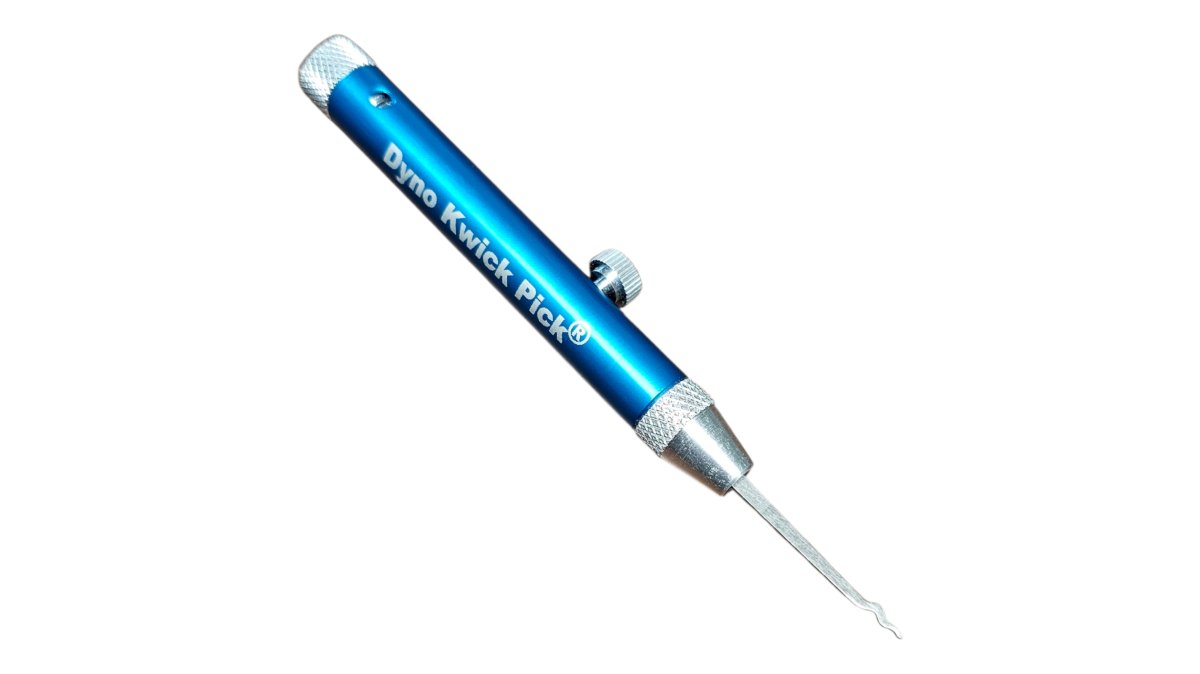
| Dyno Kwick Pick | $20.50 | Pen-style 3-in-1 pick with snake rake and tension wrench | Everyday carry and quick raking |
| Replacement Tension Wrench | $5.99 | Tapered steel torsion tool | Spare or replacement tension control |
| Replacement Snake Rake | $6.99 | 0.032" stainless steel rake | Fast raking on standard pins |
| Dangerfield Repinnable Practice Lock Kit | $47.99 | 6-pin mortise cylinder with 30+ pins | Building skill progressively |
| Practice Locks Set, 3 Clear Progressive Locks | $49.99 | Standard, spool, and serrated pin locks | Learning security pin feedback |
| Beginners Visual Guide | $24.99 | 190+ color illustrations, 176 pages | Understanding what happens inside the lock |
The Dyno Kwick Pick is our pick for most technicians because the pen-style body and pocket clip make it genuinely discreet, and the aluminum construction with a corrosion-resistant finish holds up to daily carry. It has been made in the USA and used by locksmiths for over 25 years. The one limitation: it is a raking tool first, so it excels on standard pins and struggles with high-security cylinders that demand single-pin precision.

For skill building, the repinnable practice kit is the better investment. You start with one or two standard pins, then add spool and serrated pins as your feel improves.
How to Use Tension Wrenches Effectively
Tension is the part beginners get wrong. The tension wrench applies light rotational pressure to the cylinder while your pick works the pins. Too much pressure and the pins bind so hard they will not set. Too little and nothing binds at all.
Here is the sequence that works:
- Insert the tension wrench into the bottom of the keyway, the widest part
- Apply light pressure in the direction the lock turns, roughly the weight of a coin resting on the tool
- Insert the pick and feel for the first pin that binds
- Set that pin with a small upward lift, then move to the next binding pin
- Maintain constant tension throughout; releasing it resets every set pin
The most common mistake is pressing harder when a lock will not open. More tension makes the job harder, not easier.
Choosing the Right Torsion Wrench for the Job
Torsion wrench selection comes down to keyway width and lock type. A tapered steel wrench, like the Dyno Kwick Pick replacement, fits many keyways because the taper lets you seat it at different depths. Bottom-of-keyway tension suits most pin tumblers. Top-of-keyway tension gives more room for your pick on narrow keyways but requires a thinner tool.
If you carry one wrench, carry a tapered one. It covers more locks than a fixed-width tool.
Professional Locksmith Tool Belt Essentials
A technician's belt should stay light, but "light" does not mean "one tool." The mistake most guides make is treating every pick-shaped object as the same category.
Category 1, Lock picks (non-destructive entry). These manipulate the pins inside a lock cylinder. They include rakes, single-pin hooks, and tension wrenches. They are what you reach for when a cabinet, panel, or storage unit is locked and you have authority to open it.
Category 2, Mechanical picks (seal and component removal). These are the short, angled hooks sold in automotive and small-engine sets. They pull gaskets, O-rings, seals, and clips.
A working belt for a maintenance tech usually needs both categories, kept separate so you never grab the wrong one under pressure:
- A pen-style lock pick with a snake rake and tension wrench, clipped tip-down in a dedicated loop
- A tapered tension wrench as a spare, since tension tools are the part most often lost or bent
- A small flashlight or pen light for keyway inspection
- A basic screwdriver set for panel and cover access
- A separate mechanical pick set for gasket and O-ring work, stored in its own pouch
What most guides miss is that retention matters as much as the tool itself. A pick that falls out of a loose pocket is a pick you no longer have.

A common pattern among technicians who carry both categories is color-coding or physically separating the pouches. When you are on a ladder with one hand free, the difference between a lock pick and a gasket pick should be obvious before you pull it out.
Lock Picking Legal Requirements for Technicians
Possession rules vary by state, and several states restrict lock picking tools to licensed professionals or require them to be carried only in the course of work.
The practical safeguards fall into three buckets: authorization, documentation, and conduct.
Authorization. Before you carry tools off-site, confirm in writing that your employer or the property owner authorizes you to open locks on their behalf. A work order, a property management agreement, or a signed service contract is usually enough.
Documentation. Carry proof of your role and your current assignment. A work order that lists the specific unit or panel you are opening is stronger than a generic business card.
Conduct. Never use the tools on a lock you are not authorized to open, even if you could. Never demonstrate the tools to a bystander. Never leave a pick visible in a cupholder or on a dashboard.
A short compliance checklist for technicians:
- Carry tools only while on the job or traveling to a job
- Keep work documentation, such as a work order or property management authorization, with you
- Store tools out of sight when not in use
- Never use the tools on a lock you are not authorized to open
- Check your state's statutes before you buy, not after
- Confirm whether your state requires a license for possession, not just for paid locksmith work
Laws change, and penalties differ widely. Confirm your state's current rules with the state legislature's statute database or a local attorney before carrying tools off-site.
Maintenance and Storage of Lock Picking Tools
Clean tools pick better. Wipe picks and tension wrenches with a dry cloth after each use to remove hand oils and grit. A light film of oil on the tension wrench keeps it moving smoothly in the keyway, but keep oil off the rake teeth, where it attracts dust.
Storage matters more than most people think. A rigid case or a dedicated belt loop prevents the bending that ruins rake profiles. For the Dyno Kwick Pick, the pen body itself protects the rake when retracted, which is one reason it survives daily carry better than bare picks in a pouch.
Replace worn parts rather than forcing them. A tension wrench that has lost its spring or a rake with a flattened tip will cost you more time than the replacement part costs in money.
Conclusion
The hard part of carrying lock picking tools for maintenance work is not the picking. It is staying legal, keeping your kit light, and knowing when to stop and drill instead. Get those three right and a compact pick earns its place on your belt.
Dyno Kwick Pick is built for exactly that job: a pen-style 3-in-1 tool with a snake rake and tension wrench, made in the USA and trusted by locksmiths for over 25 years. It is discreet enough for everyday carry, durable enough for daily use, and simple enough for a beginner to learn on. Add the Dyno Kwick Pick to your kit and start opening locks without breaking them.
Frequently Asked Questions
What lock picking tools do maintenance technicians actually need?
A practical starting kit includes a pen-style pick with a snake rake and tension wrench, a set of replacement picks in different profiles, and a repinnable practice lock for skill building. The Dyno Kwick Pick ($20.50) covers the basics with a 3-in-1 design, while the Dangerfield Repinnable Practice Lock Kit ($47.99) lets you practice on standard, spool, and serrated pins before you encounter them on a real job.
Are lock picking tools legal for maintenance technicians to carry?
Legality depends on state and local law, not on your job title. Some states restrict possession of lock picking tools unless you can show a legitimate purpose, and a few require a locksmith license. Check your state statutes and any local ordinances before carrying tools on the job. Keep your employer's written authorization and a copy of your work order with you as proof of legitimate use.
How do I use a tension wrench without breaking it?
Apply light, steady pressure in the direction the lock turns, using only your fingertip. Heavy tension binds pins and makes feedback harder to read. The Dyno Kwick Pick replacement tension wrench ($5.99) is a tapered steel design that fits a wide range of locks, so keep a spare in your kit. If a wrench bends, reduce pressure rather than forcing it.
What is the best lock pick set for beginners on a maintenance team?
Start with a single pen-style tool and a practice lock rather than a large set. The Dyno Kwick Pick ($20.50) is beginner-friendly and includes a snake rake and tension wrench. Pair it with the 3-lock progressive set ($49.99) to build feel for standard, spool, and serrated pins before you work on live hardware.
How does the Dyno Kwick Pick compare to standard pick sets?
A standard pick set gives you many profiles in a pouch. The Dyno Kwick Pick is a single pen-style tool with a snake rake, tension wrench, and pocket clip, so it carries discreetly and deploys fast. It has been made in the USA and used by locksmiths for over 25 years. For quick raking on common locks, the compact format often beats digging through a full set.
How should I store and maintain my lock picking tools?
Wipe picks and tension wrenches with a dry cloth after each use to remove hand oils, then store them in a pouch or case that keeps tips from rubbing together. Check tips for burrs or bends monthly. The Dyno Kwick Pick has a polished, corrosion-resistant aluminum body, and replacement rakes ($6.99) and tension wrenches ($5.99) are available if a component wears out.
0 commentaire