

Table of Contents
- Why a Lock Picking Tool Warranty Protects Your Investment
- Lock Pick Tool Durability: What Warranty Terms Reveal About Build Quality
- What a Lock Pick Set Warranty Should Cover (and What It Won't)
- Lifetime vs. Limited Warranty: How to Compare the Terms
- Lock Pick Tool Replacement Policy: Repair, Replace, or Refund
- How to Make a Warranty Claim (Step by Step)
- Lock Pick Set Customer Support: What Good Service Looks Like
- Care and Maintenance That Preserve Your Coverage
- Frequently Asked Questions
Last Updated: October 18, 2026
Why a Lock Picking Tool Warranty Protects Your Investment
A lock picking tool warranty is a written promise that the maker will repair or replace a tool that fails because of a defect in materials or workmanship. At Dyno Kwick Pick, we treat that promise as part of the product, not fine print.

Picks take abuse. Thin steel flexes thousands of times inside a lock cylinder, and tension tools twist under load. A good warranty tells you the maker expects the tool to survive that work. A weak one tells you the opposite.
Below, we explain exactly what a warranty should cover, how to compare terms, and how to file a claim without a fight.
Lock Pick Tool Durability: What Warranty Terms Reveal About Build Quality
Warranty length is a rough proxy for durability.
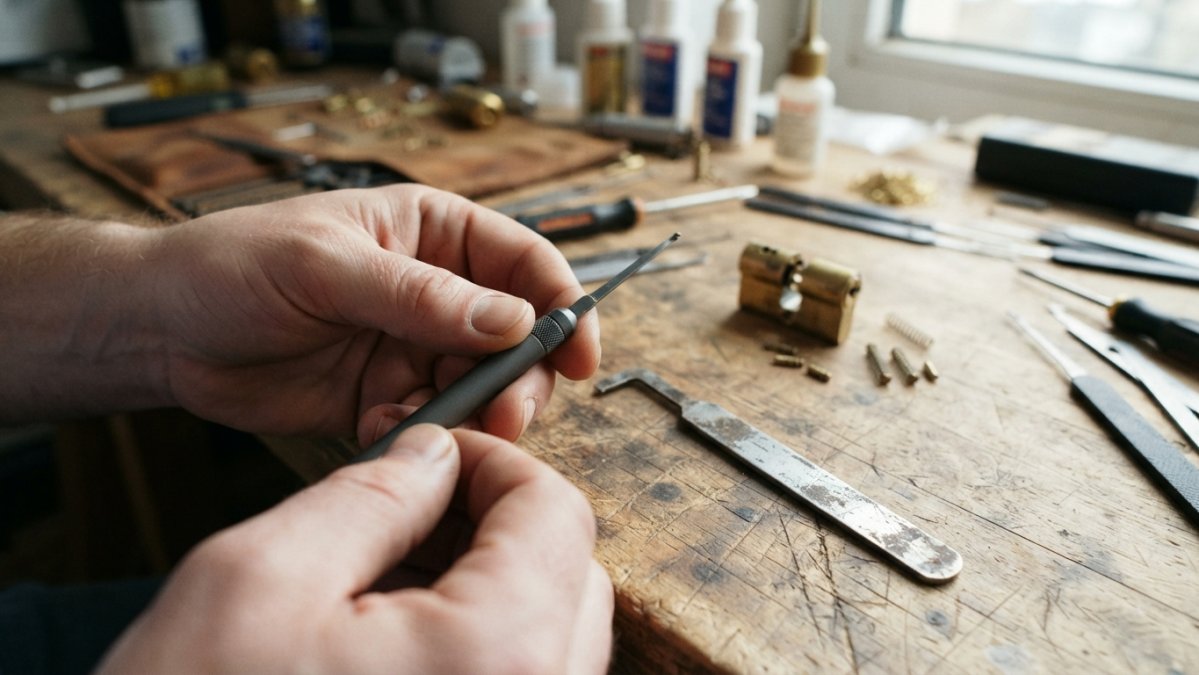
Look at what the terms protect. A policy that covers manufacturer defects but not wear is normal. A policy that covers almost nothing is a warning.
Materials matter here. Our Dyno Kwick Pick uses an aluminum body with a polished, corrosion-resistant finish, and the replacement snake rake is stainless steel at 0.032 inches.

- Aluminum body: resists bending and rust in daily carry
- Stainless rake: holds shape through repeated raking
- Tapered steel tension wrench: fits many locks
A common mistake is judging a lock-pick set by price alone. The cheap set that snaps in month two costs more than the tool you buy once.
What a Lock Pick Set Warranty Should Cover (and What It Won't)
A lock pick set warranty should cover defects in materials and workmanship for a stated period. It should not cover wear from normal use, damage from misuse, or tools you modified yourself.
That split is standard across the industry. Understand it before you buy, and you will never be surprised by a denied claim.
Manufacturer Defects vs. Normal Wear
A manufacturer defect is a flaw that existed when the tool left the factory. Examples include a rake with a bad heat treat, a cracked handle, or a tension wrench cut from flawed stock.

Normal wear is different. Tips round off, finishes scuff, and springs soften. That is use, not a defect.
- Defect: the tool fails in the first week of light use
- Wear: the tip dulls after months of practice
- Defect: the body cracks at a seam
Coverage Exclusions: Misuse, Modification, and Unauthorized Use
Most policies exclude misuse, modification, and unauthorized use. Bending a pick while prying, grinding a tip, or using the tool on a lock it was never designed for will void coverage.
Lifetime vs. Limited Warranty: How to Compare the Terms
A lifetime warranty covers the tool for as long as you own it. A limited warranty covers a set period, covers only certain parts, or both. Neither label is automatically better. Read the terms, not the badge.
| Term | Lifetime Warranty | Limited Warranty |
|---|---|---|
| Duration | Life of the tool | Fixed period |
| Typical coverage | Defects in materials | Defects, some parts |
| Wear covered | Rarely | Rarely |
| Proof needed | Usually yes | Usually yes |
| Best for | Daily professional use | Occasional hobby use |
Coverage by Tool Type and Failure Mode
Most warranty pages describe the whole kit in one sentence, but coverage usually differs by component. Before you buy, map the terms to the parts you will actually stress:
- Picks and rakes: A snapped pick from a bad heat treat is a classic defect claim. A rounded tip after months of practice is wear and usually excluded. Ask whether the maker treats a bent shaft as a defect or as misuse.
- Tension wrenches: These twist under load, so bending is common. Many policies exclude bent wrenches as "normal use," even when the steel was flawed. Confirm whether a wrench that snaps at the bend is covered.
- Handles and bodies: Cracks at a seam or a failed pocket clip are usually covered as workmanship defects. Cosmetic scuffs and finish wear are not.
A practical rule: a defect shows up early and without warning; wear shows up gradually with use. If a tool fails in the first week of light use, treat it as a defect claim and document it immediately.
A Comparison Checklist You Can Take to the Product Page
Use this checklist when you compare lock pick tool warranties side by side:
- Does it cover the whole tool or only the body?
- Are picks, tension wrenches, handles, and cases covered on the same terms?
- Are replacement parts covered, or sold separately?
- Is wear excluded, and how is wear defined?
Lock Pick Tool Replacement Policy: Repair, Replace, or Refund
A lock pick tool replacement policy usually offers one of three outcomes: repair, replacement, or refund. Most makers choose replacement for low-cost parts and reserve refunds for dead-on-arrival items. Repair rarely makes sense for a pick because the labor costs more than the part.
Total Cost of Ownership and Warranty Value
The sticker price is only part of what a tool costs you. Warranty value is the price plus the cost of replacements minus what the maker covers. Run the math before you buy:
- Price of the tool: the entry cost.
- Expected replacement cost: how often you expect to replace a rake or tension wrench, multiplied by the part price.
- Warranty coverage: what the maker will replace for free, and for how long.
- Claim friction: shipping cost, turnaround time, and proof required. A free replacement that costs $8 to ship and takes three weeks may be worth less than a $6 part you can buy today.
A long warranty on a tool with no available parts is worth less than a shorter warranty on a modular tool with cheap, in-stock replacements. Compare both numbers, not just the warranty badge.
How Modular Design Changes the Math
This is where modular design pays off. Our Dyno Kwick Pick uses replaceable parts, so a worn rake or lost tension wrench does not mean a new tool. A replacement tension wrench runs $5.99, and a replacement snake rake runs $6.99. A tool with cheap, available parts stays in service for years, and the warranty becomes a backstop rather than the only path to a working tool.
Claim Friction: What a Replacement Really Costs You
Before you rely on a warranty, find out what a claim actually involves:
- Who pays return shipping, and is it refundable if the claim is approved?
- Is the replacement shipped before you return the failed part, or after?
- How long does turnaround take, and is there a stated window?
- Do you need the original packaging, or just the receipt?
A policy that replaces a $6.99 part for free but requires $8 in shipping and a two-week wait is not much of a benefit. A policy that ships a replacement first, with a prepaid label, is worth more than its terms suggest. Weigh the friction against the part price and decide which policy actually protects your investment.
How to Make a Warranty Claim (Step by Step)
To make a warranty claim, document the failure, find your proof of purchase, and contact the maker through their official support channel. Keep the process factual and you will move faster.
- Photograph the failure. Show the break clearly, plus the whole tool.
- Find your proof of purchase. A receipt or order confirmation is usually required.
- Describe how it failed. State the lock type and what you were doing.
- Contact support in writing. Email keeps a record.
- Ship only when told. Wait for return instructions first.
- Keep the tracking number. It settles most disputes.
Many states give buyers additional rights under consumer protection law. The Federal Trade Commission's consumer advice explains how written warranties work and what sellers must disclose.
Lock Pick Set Customer Support: What Good Service Looks Like
Good lock pick set customer support answers three things fast: whether the failure is covered, what the fix is, and how long it takes.
Watch for these signals before you buy:
- A published warranty page in plain language
- A direct email or contact form, not just a social page
- Replacement parts sold openly on the site
- Clear shipping terms for claims
The Better Business Bureau's guidance on warranties and guarantees is a useful check on how a seller handles disputes before you spend money.
Professional locksmiths judge a tool by how it behaves in the field and how the maker responds when something breaks.
Care and Maintenance That Preserve Your Coverage
Care and maintenance keep a warranty valid. Most denials trace back to neglect or modification, not to bad luck.
- Wipe picks dry after use to stop corrosion
- Store tools in a case, not loose in a pocket with keys
- Use the right tension wrench for the lock
- Never pry or force a pick
Our pen-style design helps here. The pocket clip and pen body protect the tip in daily carry, and the attachment cap adds a D-ring or key ring anchor so the tool stays put. For a set that arrives protected and gift-ready, the Dyno Kwick Pick Gift Set includes an engraved wooden box and a spare rake.
One last boundary: buy only what you can legally use. The American Bar Association's overview of state law notes that lock-picking rules vary by state, so check your local law before you carry a set.
Frequently Asked Questions
Why is a warranty important for lock picking tools?
A lock picking tool warranty tells you how much confidence the maker has in the build. Picks and tension tools flex under repeated pressure, and a warranty defines who pays when a rake snaps or a tip bends in a lock. It also gives you a documented path to a replacement instead of buying a new tool at full price. Before you buy, read the warranty period, what counts as a manufacturer defect, and whether wear from daily field use is excluded. A clear warranty is often the cheapest quality signal you get.
Do lock pick tool warranties cover broken picks?
It depends on why the pick broke. Most warranties cover manufacturer defects such as a faulty spring, a cracked handle, or a tip that failed under normal use. They usually do not cover damage from prying, using the pick as a lever, dropping it, or modifying it. Keep your proof of purchase and note how the failure happened. If a snake rake snaps during ordinary raking on a standard pin tumbler, that is a strong defect claim. If it bends while you were forcing a seized lock, expect the claim to be denied.
What can void a lock pick tool warranty?
Common voids include disassembling the tool, bending or grinding the pick, using it on locks it was not designed for, and damage from improper storage. Some policies also exclude tools used in commercial lockout service beyond a stated period. Save your receipt, avoid modifications, and follow the maker's care instructions. If you are a working locksmith, check whether the warranty treats professional daily use differently from hobby use before you rely on it.
How do I make a warranty claim for a lock pick set?
Start by finding the warranty terms and the proof of purchase, since most claims require both. Photograph the failed part and note the date and the lock type you were working on. Contact the seller's support channel with your order number and a short description of the failure. Many brands ship a replacement part rather than a whole new set. For a pen-style tool, that might mean a replacement snake rake at $6.99 or a tension wrench at $5.99 instead of replacing the $20.50 tool.
A tool that fails with no warranty leaves you buying a replacement and losing a job. Dyno Kwick Pick is built for daily field use, with a pen-style 3-in-1 design, replaceable parts, and a satisfaction-first guarantee from a maker trusted by locksmiths for over 25 years. Get started with Dyno Kwick Pick and carry a tool you can count on.
0 comments