

Table of Contents
- What You'll Need Before You Start
- How Pin Tumbler Locks Work: The Basics of Lock Picking
- Step-by-Step: How to Pick a Lock for Property Maintenance
- Professional Locksmith Tool Belt Essentials for Maintenance Techs
- Lock Picking Legal Requirements for Landlords and Maintenance Staff
- Common Mistakes Beginners Make (and How to Avoid Them)
- Frequently Asked Questions
Last Updated: September 29, 2026
What You'll Need Before You Start
Lock picking for property maintenance is a practical skill that helps technicians open stuck doors, cabinets, and storage units without drilling the lock. This guide from Dyno Kwick Pick covers the basics for beginners.
The goal isn't to become a locksmith. It's to handle common lockouts fast. A tenant moves out and leaves the door locked. A cabinet key goes missing. A storage unit needs a quick check. These are everyday problems on a maintenance route.
Before you touch a lock, gather a few basics:
- A pen-style pick tool with a snake rake and tension wrench
- A clear practice lock to build your feel for the pins
- A small flashlight or phone light
- A notepad to log which locks gave you trouble
- A signed work order or access authorization
That last item matters more than the tools. We'll come back to it.

How Pin Tumbler Locks Work: The Basics of Lock Picking
A pin tumbler lock is the most common lock you'll meet on the job. It uses spring-loaded pins that drop into a rotating cylinder to keep the door shut. Understanding the internal stack is what separates a technician who can open a lock from one who just jiggles a rake and hopes.
Here's the simple version. Inside the lock body, a row of pins sits in chambers. Each chamber holds a driver pin on top and a key pin below. A spring pushes both down into the keyway. The plug, the rotating cylinder the key turns, sits inside a fixed housing. The gap between the plug and the housing is the shear line.
When you slide the right key in, the notches lift each pin pair to the same height. That height is called the shear line. At the shear line, the cylinder can rotate and the lock opens.
Keyway, Pins, and the Shear Line
Three terms cover most of what you need:
- Keyway: the slot where the key enters. Its shape limits which tools fit. A wide keyway accepts a standard rake; a narrow or paracentric keyway may only take a slim hook.
- Pins: the spring-loaded pieces that block rotation until they're set. Each chamber holds a key pin (bottom) and a driver pin (top).
- Shear line: the gap between the plug and the housing. Pins must sit here to open the lock.
What Happens When You Pick
When you pick a lock, you're lifting each pin pair to the shear line one at a time. The tension wrench holds slight rotational pressure so set pins stay put while you work the rest.
Here's the mechanism in plain terms. Light tension rotates the plug a fraction of a degree. That tiny rotation misaligns the pin chambers just enough that a lifted driver pin catches on the plug's edge, it can't drop back down. You feel a faint click and the pin is set. Once every pin pair sits at the shear line, the plug rotates freely and the lock opens.
This is why tension matters more than pick motion. Too much tension binds the pins against the chamber walls and nothing sets. Too little tension and set pins drop back down before you finish the row.
Common Variations You'll Meet
Not every pin tumbler lock is the same. A few variations show up on maintenance routes:
- Standard pin tumbler: the basic stack described above. Most residential doors and padlocks.
- Wafer lock: flat wafers instead of pins. Common on cabinets, file drawers, and cheap desk locks. Easier to rake.
- Security pins: spool and serrated driver pins that catch and require counter-rotation. Found on newer or higher-security cylinders.
That's the whole idea. Everything else is feel and practice.
Step-by-Step: How to Pick a Lock for Property Maintenance
Picking a standard pin tumbler lock takes two moves: steady tension and the right pick motion. Most beginners rush the first part, and that's why the lock won't budge.
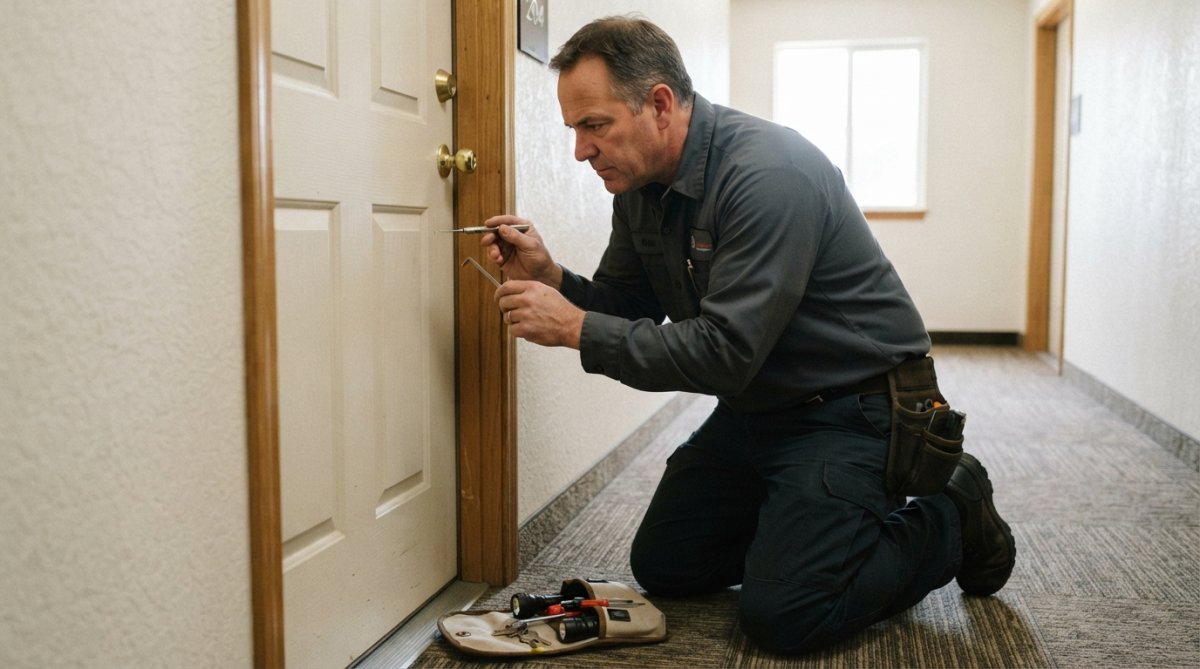
Step 1: Apply Light Tension
Insert the short end of your tension wrench into the bottom of the keyway. Push it in the direction the lock turns, the same way a key would rotate.
Step 2: Rake or Single Pin Pick
Slide your pick into the keyway above the tension wrench. Now you have two paths.
- Try raking first on cheap, low-security locks
- Switch to single pin picking when raking stalls
- Reset and start over if pins feel jammed
Professional Locksmith Tool Belt Essentials for Maintenance Techs
A maintenance kit needs different tools than a locksmith's full bench. You want gear that fits a pocket and handles the locks you actually see.
| Item | What It's For | Beginner Priority |
|---|---|---|
| Pen-style pick tool | Raking and single pin picking | High |
| Tension wrench | Holding pins at the shear line | High |
| Clear practice lock | Learning pin feel | High |
| Pick set with multiple hooks | Advanced and security pins | Later |
| Lishi tool | Decoding and picking specific keyways | Later |
Lock Picking Legal Requirements for Landlords and Maintenance Staff
Lock picking legal requirements for landlords and maintenance staff vary by state. No single rule covers the whole country, so check your state and local laws before you carry a pick on the job. What most guides miss is that maintenance staff operate under a different legal framework than locksmiths, and that difference is where liability lives.

The Core Legal Distinction
The core issue is intent. Many states treat lock picks as burglary tools when someone carries them with criminal intent. As a maintenance tech, your protection is a paper trail that shows authorized purpose.
That distinction matters for three reasons:
- Insurance: Your employer's liability policy may cover lockouts handled as part of maintenance duties. It likely won't cover side jobs.
- Licensing: Some states require a locksmith license for any compensated lock work. Check your state's trade licensing board.
- Tenant rights: Entry rules are separate from lock-picking rules. You can legally pick a lock and still illegally enter a unit.
A Maintenance-Specific Compliance Workflow
Follow these habits on every job:
- Get written authorization before opening any lock. A work order signed by the property manager or landlord is the standard.
- Keep a work order with the unit number and date. Log entry and exit times.
- Verify tenant notice requirements. Many states require advance notice before entering an occupied unit. Know your state's notice window.
- Store tools in a locked box or vehicle. Never leave picks loose in a shared maintenance cart.
- Never pick a lock for a friend or cash side job. This is the fastest way to turn a routine skill into an unlicensed-trade violation.
- Document the reason for entry. "Tenant lockout," "abandoned unit inspection," or "emergency water shutoff" are defensible. "Just checking" is not.
Where to Check Your State's Rules
Check your state's rules on burglary tools and landlord entry notice. Many states require advance notice before entering an occupied unit. The U.S. Department of Housing and Urban Development publishes guidance on tenant rights that touches on entry rules. Your state's attorney general office and trade licensing board publish the specific statutes for burglary tools and locksmith licensing.
Common Mistakes Beginners Make (and How to Avoid Them)
The biggest beginner mistake is too much tension. Heavy pressure on the wrench binds the pins, and the lock fights back. Ease off and let the pins move.
Other traps to watch for:
- Rushing the rake. Fast scrubbing without steady tension sets nothing.
- Picking the wrong direction. Match the wrench to the way the lock turns.
- Skipping practice locks. Real locks hide what's happening inside. Clear locks show you.
- Ignoring security pins. Spool and serrated pins need a lighter touch and counter-rotation.
- Carrying tools without authorization. See the section above.
Frequently Asked Questions
Is it legal for property managers to pick locks?
In most states, property managers and maintenance staff can pick locks on units they manage, but rules vary. Some states require a locksmith license for any paid lock work, while others allow owners and their employees to work on their own properties. Always check your state and local laws, keep written authorization from the property owner, and document every entry. Never pick a lock on a tenant-occupied unit without proper notice and legal cause.
What tools do beginners need for lock picking?
Start with three items: a tension wrench, a rake pick, and a hook pick. A pen-style tool like the Dyno Kwick Pick bundles a snake rake and tension wrench in one pocket-sized device, which suits maintenance techs who need fast, discreet access. Add a set of clear practice locks to see how pins move, and a beginner's guide to learn technique before you touch a real door.
How does a pin tumbler lock work?
A pin tumbler lock holds a stack of pins in each chamber. The key pins sit under driver pins, held down by springs. When you insert the right key, each pin stack rises so the gap between key and driver pin lines up at the shear line, letting the cylinder turn. Picking mimics this by lifting pins one at a time while light tension holds the ones already set.
Can lock picking help in emergency lockout situations?
Yes. Non-destructive entry saves the lock, the door, and the tenant's property. A maintenance tech who can rake or single pin pick a standard pin tumbler lock can open a unit in seconds instead of drilling the cylinder or calling a locksmith after hours. Practice on clear training locks first so you build the feel for tension and pin feedback before you face a real lockout.
0 comments